Cervical Cancer Screening Reach Drops as Kenyan HPV Test Shipments Stall
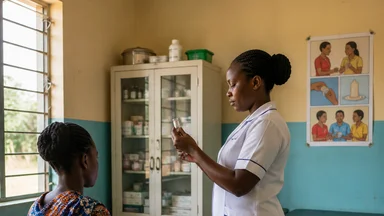
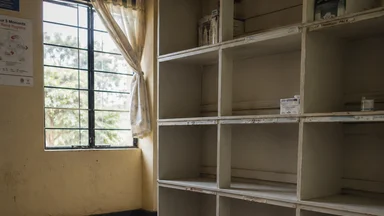
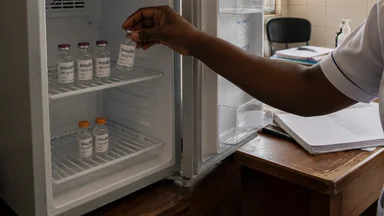
On a Tuesday morning in late May, Jane Akinyi, a community health worker in Kisumu's Nyando sub-county, opened a storage cabinet expecting to find HPV self-sampling kits. The cabinet was empty. For the third consecutive month, no new shipments had arrived. The kits, which had allowed women to screen themselves for cervical cancer without a pelvic exam, were gone. Across Kenya, the same scene played out in hundreds of clinics. A supply-chain disruption — traced to a single global manufacturer and a procurement snag at the World Health Organization — had stalled deliveries since March 2026. Screening coverage, which had climbed to roughly 25% in 2025, dropped below 20% by mid-year, according to Ministry of Health estimates. For the roughly 3,000 Kenyan women who die from cervical cancer each year, the delay could mean the difference between early treatment and a late-stage diagnosis.
A stalled shipment strands thousands of women
The HPV test kits in question are the cornerstone of Kenya's cervical cancer screening strategy. They detect high-risk strains of the virus that cause nearly all cervical cancers. Self-sampling — where a woman inserts a swab herself and sends it to a lab — had dramatically expanded access, especially in rural areas where pelvic exams were often unavailable or culturally unacceptable. In Siaya County, a pilot program launched in 2024 saw uptake rise sharply, with community health workers distributing kits door to door. By early 2026, the program was being scaled nationally.
Then the shipments stopped. The Ministry of Health confirmed in a May briefing that a WHO procurement contract had encountered a dispute with the sole supplier — a multinational diagnostics company based in Europe. The exact nature of the snag remains unclear, but officials say it involves pricing and quality-assurance documentation. Without the WHO-facilitated bulk purchase, individual counties cannot afford the test cartridges, which cost roughly US$8–12 each on the open market — a prohibitive sum for public facilities.
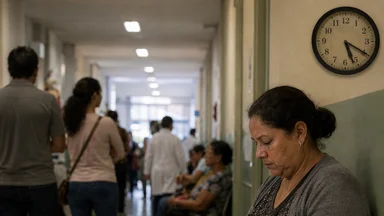
In Kisumu, the county health department reported that 14 of its 20 main clinics had run out of kits by April. Women who had been screened before and were due for rescreening were told to wait. Some were given appointments three months out; others were simply turned away. “I came here last year for the test, and now they say come back in August,” said Grace, a 42-year-old mother of four who asked that her real name not be used. “But what if the cancer is growing now?”
The impact on screening coverage has been immediate. According to data shared by the National Cancer Control Program, the proportion of eligible women screened in the first quarter of 2026 fell to 18%, down from 24% in the same period the previous year. The WHO's 90-70-90 targets — 90% of girls vaccinated against HPV, 70% of women screened by age 35, and 90% of those with pre-cancer treated — now seem further out of reach. Kenya had hoped to achieve these by 2030. That timeline is slipping.
Self-sampling promised to close the gap
Self-sampling was supposed to be the tool that finally closed Kenya's screening gap. For years, the country struggled with low uptake of traditional Pap smears, which require a speculum exam, a laboratory, and trained personnel. Many women avoided screening because of fear, discomfort, or lack of access. HPV self-sampling removed those barriers: a simple swab, a tube, and a trip to a drop-off point. Studies from other low-income settings showed that self-sampling could increase screening participation by 30–50%.
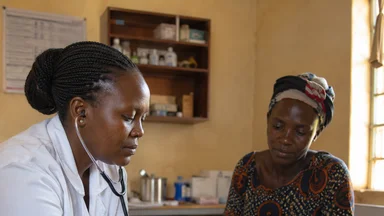
Kenya's pilot in Siaya County, run in partnership with the Kenya Medical Research Institute, confirmed those findings. Between 2024 and 2025, more than 40,000 women were screened through the program. Community health workers were trained to explain the process, distribute kits, and collect samples. The samples were sent to a central lab in Kisumu for HPV testing. Women who tested positive for high-risk strains were referred for further evaluation, often with a nurse using visual inspection with acetic acid (VIA) — a low-tech alternative that does not require lab supplies.
Now, with no kits to distribute, the community health workers are left with little to offer. “We had built trust,” said Peter Ochieng, a community health worker in Kisumu who has been in the field for three years. “Women would come to us. They knew the test was easy. Now we have to tell them we don't have anything. Some of them are angry. Some just stop coming.” That loss of trust may have lasting consequences. Even when supplies resume, it may take months to rebuild the screening momentum.
The interruption also exposes a deeper problem: the overreliance on a single test platform. Kenya's national screening guidelines recommend HPV testing as the primary method, but the country has only one approved supplier for the test cartridges used in its central lab network. When that supply chain breaks, the entire system stalls. “We put all our eggs in one basket,” said Dr. John Mwangi, a pathologist at Kenyatta National Hospital. “And now the basket has a hole.”
Supply-chain fragility in plain sight
Kenya's HPV test supply chain is a study in fragility. The test cartridges are manufactured by a single company — a global diagnostics firm that dominates the market for HPV DNA testing in sub-Saharan Africa. The company's reagents are proprietary, meaning no other manufacturer can produce compatible cartridges. Kenya's Ministry of Health orders through a WHO-facilitated procurement mechanism, which aggregates demand from multiple countries to negotiate lower prices. But when that mechanism hit a snag earlier this year, Kenya had no alternative source.
Port delays and duty clearance issues have compounded the problem. Even when shipments do arrive at Mombasa port, they can sit for weeks awaiting customs inspection. The test cartridges require cold-chain storage, and prolonged delays can compromise their shelf life. County-level buffer stocks are minimal — often just a few weeks' supply — because of budget constraints. “We operate hand to mouth,” a supply-chain officer at the Kenya Medical Supplies Authority (KEMSA) explained. “We order what we think we'll need for the next quarter. There's no room for error.”
Global demand for HPV tests has surged in recent years, as more countries adopt WHO-recommended screening protocols. The manufacturer has struggled to keep up, leading to periodic shortages worldwide. In 2025, a similar but shorter disruption affected several countries in West Africa. Kenya's current crisis is the most severe yet, lasting more than three months with no end in sight. The Ministry of Health has said it is exploring alternative suppliers, but regulatory approval for new tests can take months or years.
The situation mirrors broader challenges in global health supply chains, where a handful of companies control critical diagnostics and treatments. For cervical cancer, the stakes are particularly high because the disease is almost entirely preventable with timely screening and treatment. A delay of even a few months can mean the difference between catching pre-cancerous lesions and diagnosing invasive cancer. As one oncologist in Nairobi put it: “We are fighting a preventable disease with a supply chain that was not built for resilience.”
Delayed diagnosis carries a known cost
The cost of a delayed diagnosis in cervical cancer is well documented. The disease progresses slowly — it can take 10 to 15 years for HPV infection to develop into cancer — but once symptoms appear, the window for curative treatment narrows rapidly. In Kenya, more than 60% of cervical cancer cases are diagnosed at stage III or IV, when survival rates drop below 20%. With early detection, survival can exceed 90%.
Modeling studies suggest that a six-month delay in screening and follow-up can reduce five-year survival by roughly 20 percentage points. For the thousands of women who would have been screened during the current stockout, the backlog means that many will not receive a diagnosis until their cancer has advanced. The pain and palliative care burden will rise accordingly. Kenya's palliative care services are already stretched thin, with morphine access limited and hospice beds scarce in rural areas.
The human toll is difficult to quantify, but the numbers are stark. Each year, about 5,200 Kenyan women are diagnosed with cervical cancer, and 3,000 die from it. If screening coverage remains below 20% for the rest of 2026, an additional 500–800 women may present with late-stage disease compared to a scenario with full screening. That is 500–800 preventable deaths — mothers, sisters, daughters — whose cancers could have been caught early.
“We are losing ground we fought hard to gain,” said Dr. Faith Njoki, a gynecologic oncologist at Kenyatta National Hospital. “The screening program was starting to work. Women were coming in. Now we are going to see more advanced cases, more suffering, and more deaths. And it didn't have to happen.”
What the numbers reveal about equity
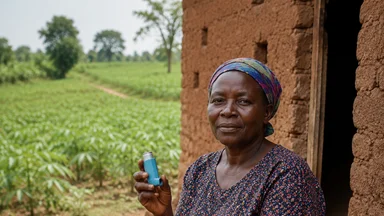
The stockout does not affect all Kenyan women equally. Wealthier women in Nairobi and other urban centers can still access HPV testing at private laboratories, where tests cost roughly US$20–40 — affordable for the middle class but out of reach for the majority. For women in rural Kisumu, Siaya, or Migori, the public clinic was the only option. Now that option is gone.
The screening rate gap between the richest and poorest quintiles has widened. In 2025, the national screening rate was 24%, but among women in the lowest wealth quintile, it was just 12%. With the stockout, that figure has likely fallen further. The WHO's 90-70-90 targets are designed to ensure equity — 70% of women screened, regardless of income. Kenya's current trajectory suggests it will miss that target by a wide margin.
The disruption also highlights the geographic disparities within the country. Counties with well-stocked hospitals and better logistics, like Nairobi and Mombasa, have managed to maintain some screening using residual stocks. But rural counties, which rely on the central supply chain, have been hit hardest. In Turkana County, where screening rates were already below 5%, the stockout has effectively halted all screening.
“The women who need screening the most are the ones who are losing access,” said Dr. Samuel Otieno, a public-health researcher at the University of Nairobi. “It's a classic case of the inverse care law: those with the least resources bear the greatest burden of disruption.” The Ministry of Health has acknowledged the disparity but has not announced any targeted measures to reach rural populations during the shortage.
Local solutions that could soften the blow
While the HPV test shortage is acute, it is not the only way to screen for cervical cancer. Visual inspection with acetic acid (VIA) — a low-tech method in which a nurse applies vinegar to the cervix and looks for pre-cancerous changes — has been used in Kenya for decades. VIA does not require lab supplies, electricity, or expensive equipment. It can be performed by a trained nurse in a basic clinic. The results are immediate, and women with abnormal findings can be treated on the spot with cryotherapy or thermal ablation.
In Migori County, a VIA training program launched in 2023 showed promising results. More than 200 nurses were trained, and screening rates increased by 40% in the first year. However, VIA has limitations: it is less sensitive than HPV testing, and it requires a pelvic exam, which some women find uncomfortable or culturally unacceptable. The Ministry of Health had been phasing out VIA in favor of HPV testing, but the stockout has forced a rethink.
Some counties are reviving VIA programs as a stopgap. In Kisumu, the county health department has begun retraining community health workers to perform VIA and has deployed mobile clinics to reach women in remote areas. Cold-chain logistics for transporting VIA supplies are simpler than for HPV test kits, making it easier to maintain stock. “VIA is not perfect, but it's better than nothing,” said Dr. Emily Chebet, Kisumu County Director of Health. “We can't let women go unscreened while we wait for shipments.”
Another local solution involves sample transport. In some areas, health workers are collecting HPV samples on dry swabs — which do not require cold chain — and sending them to labs via motorcycle couriers. This approach was used successfully in the Siaya pilot and could be scaled up if test kits become available again. But for now, the bottleneck is the test itself, not the transport.
Three actions to restore screening momentum
First, the Ministry of Health must diversify its supplier base for HPV test kits. Relying on a single manufacturer is a strategic vulnerability. The WHO and other partners could help fast-track regulatory approval for alternative tests from companies in India, China, or South Korea. Kenya's Pharmacy and Poisons Board has already begun reviewing dossiers from two alternative manufacturers, but the process could take months. Expediting it should be a priority.
Second, scale up VIA as an interim backup in all counties. The training infrastructure already exists in some areas; expanding it nationwide would require modest investment. A national VIA program could cover the screening gap until HPV test supplies stabilize. The Ministry of Health should issue clear guidelines that VIA is an acceptable alternative during the shortage, and should provide counties with the necessary supplies — vinegar, speculums, and cryotherapy equipment.
Third, create a central buffer stock of HPV test kits managed by KEMSA. A buffer of three to six months' supply would insulate the system from future disruptions. This requires upfront financing, but the cost is small compared to the downstream costs of treating advanced cervical cancer. International donors, including the Global Fund and PEPFAR, could be asked to contribute. Kenya should also explore local manufacturing of test components, though that is a longer-term goal.
Empowering nurses to treat pre-cancer on site is another critical step. Currently, many women who screen positive must wait weeks for a follow-up appointment at a higher-level facility. Same-day treatment — using cryotherapy or thermal ablation — eliminates loss to follow-up and reduces the burden on the health system. Training more nurses in these procedures should be part of any national screening strategy.
The stockout has exposed the fragility of Kenya's cervical cancer screening program, but it has also created an opportunity to build a more resilient system. The choices made in the coming months will determine whether Kenya can get back on track toward its 2030 elimination goal — or whether the disease will continue to claim thousands of preventable deaths each year.