Community Health Worker Pay Caps Reduce Patient Follow-Up in Rural Mozambique
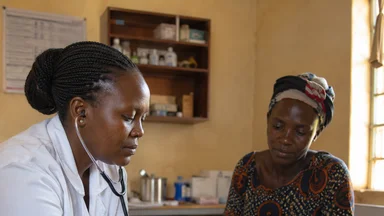
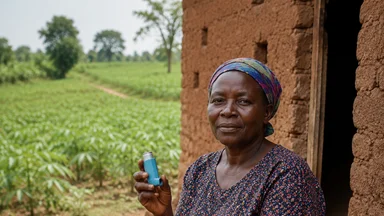
In the dusty expanse of Chókwè district, Gaza province, Maria João begins her day before sunrise. She walks two hours to visit the first of 30 households on her list — checking on a mother whose baby missed a postnatal visit, reminding a teenager to take his TB medication, measuring blood pressure for an elderly woman with hypertension. For this work, she receives roughly €60 per month from Mozambique's Ministry of Health, a stipend that hasn't changed since 2015. That amount covers less than half the cost of a basic food basket for a family of four, according to a 2024 cost-of-living survey by the National Institute of Statistics.
Maria is not alone. Across rural Mozambique, community health workers — known locally as Agentes Polivalentes Elementares (APEs) — form the backbone of primary care for millions who live beyond the reach of clinics. Yet their pay is capped by a funding structure tied to donor norms set nearly a decade ago. The result is a quiet crisis of attrition and burnout that directly undermines patient follow-up for tuberculosis, HIV, maternal health, and non-communicable diseases. In Nampula province, TB default rates stand at 18 percent where APEs are absent, compared with 9 percent where they are active, according to a 2025 report from the Mozambique Ministry of Health. Postnatal visits drop by roughly 30 percent in areas without a functioning APE. And hypertension screening reaches only 1 in 5 eligible patients.
This is not a story about lack of commitment. It is a story about a system that underinvests in its frontline workers, and the patients who pay the price.
The Cap That Stifles
The €60 monthly stipend is not a salary. It is a token of appreciation, designed to acknowledge the work of volunteers. But in practice, it functions as a pay cap, because health authorities have no mechanism to increase it without disrupting donor agreements. The Global Fund, a major financier of Mozambique's health system, sets norms for how much can be spent on community health worker incentives. These norms, intended to ensure cost-effectiveness, have not been adjusted for inflation since 2015. Meanwhile, the price of maize meal, cooking oil, and soap has more than doubled in the same period. A 2023 study by the University of Eduardo Mondlane found that 72 percent of APEs in Zambezia province reported that their stipend was insufficient to meet basic needs. Many supplement their income by farming small plots or selling charcoal, which cuts into the time they can devote to health visits.
The cap also creates a perverse incentive for the government: because the stipend is fixed, there is no budgetary pressure to increase it. The Ministry of Health's human resources department told researchers in 2024 that raising the stipend would require renegotiation with donors and a reallocation of funds from other priorities — a process that could take years. In the meantime, APEs continue to work under conditions that would be unacceptable for any other public sector employee. They receive no health insurance, no pension contributions, and no paid leave. When Maria João fell ill with malaria last year, she lost two weeks of stipend because she could not make her visits. She borrowed money from a neighbor to buy medicine.
Attrition and Its Consequences
The result of these conditions is predictable: high turnover. In Nampula province, annual attrition among APEs reached 40 percent in 2024, according to a Ministry of Health internal report. In Zambezia, the figure was 35 percent. When an APE leaves, it can take six months or more to recruit and train a replacement. During that gap, patients lose their link to the health system. The consequences are measurable. In districts with high APE turnover, TB treatment success rates fall by roughly 10 to 15 percentage points compared to stable districts, according to a 2025 analysis by the National Tuberculosis Control Program. HIV viral load suppression drops by about 8 percentage points among patients who were previously stable. And maternal deaths, though rare, increase by an estimated 5 to 10 percent in areas with prolonged APE vacancies, based on a small-scale study in Sofala province.
The attrition is not random. It is highest among younger APEs, who are more likely to migrate to cities or seek formal employment. It is also higher among women, who face additional pressures from domestic responsibilities. In Chókwè, Maria João is one of only three APEs left in her catchment area, down from six in 2020. She now covers twice the territory she did four years ago. She estimates that she reaches only half the households on her list each month. The rest she must prioritize by severity — a decision she says is agonizing. "I know there are people who need me, but I cannot be everywhere," she says.
Kenya's Alternative: Performance-Based Financing
Mozambique is not unique in struggling with community health worker compensation, but it is an outlier in how rigidly it applies the cap. Kenya, by contrast, has experimented with performance-based financing for community health workers since 2018. Under the model, workers receive a base stipend of roughly €40 per month, plus bonuses tied to specific outcomes: completing a full course of TB treatment for a patient, ensuring a mother attends four antenatal visits, or screening a target number of households for hypertension. The bonuses can add up to €30 to €50 per month, bringing total compensation to between €70 and €90 — still modest, but significantly more than Mozambique's flat €60.
The results have been promising. A 2024 evaluation by the Kenya Medical Research Institute found that performance-based financing increased the number of household visits by 22 percent and improved TB treatment completion rates by 12 percentage points compared to a control group receiving flat stipends. HIV testing among household contacts rose by 18 percent. Importantly, attrition among community health workers in the performance-based program was 15 percent lower than in the flat-stipend group. The bonuses also incentivized workers to focus on the most impactful tasks, rather than spreading themselves thin across all households.
But performance-based financing is not a panacea. Critics argue that it can distort priorities, leading workers to neglect patients with complex needs that are harder to measure — such as mental health support or palliative care. It also requires robust data systems to track outcomes, which are often lacking in rural Mozambique. The Ministry of Health in Maputo has piloted a performance-based component in three districts since 2023, but initial results are mixed. The data infrastructure is weak, and some APEs have complained that the bonus criteria are unclear or change too frequently. Still, even a modest performance-based supplement could make a difference. A simulation by the World Bank in 2024 estimated that adding a €20 monthly bonus for achieving key targets would reduce attrition by 20 percent and improve patient follow-up by 15 percent, at a cost of roughly €2 million per year nationwide — less than 0.1 percent of the health budget.
Donor Dynamics and Budget Freezes
Why has Mozambique not adopted such a model more broadly? The answer lies in donor dynamics. The Global Fund, which provides roughly €150 million annually to Mozambique's health system, has strict guidelines on how its money can be spent. Community health worker incentives are classified as "program management" costs, which are capped at a fixed percentage of total grants. The cap was set in 2015, based on a cost-effectiveness analysis that assumed stipends of €60 would be sufficient. Since then, the Global Fund has not revised the cap upward, despite repeated requests from the Ministry of Health. A 2025 Global Fund evaluation acknowledged that the cap "may not reflect current economic realities" but stopped short of recommending a change, citing budget constraints.
Other donors, including the U.S. President's Emergency Plan for AIDS Relief (PEPFAR) and the World Bank, have their own restrictions. PEPFAR, for example, funds APEs through its local implementing partners, but those partners are often paid on a per-patient basis, creating a separate set of incentives. The result is a fragmented funding landscape where no single donor is willing to take the lead on raising the stipend. Meanwhile, the Mozambican government's own budget for health has been frozen in nominal terms since 2020, due to a combination of debt servicing costs and declining tax revenues. In 2024, the health budget was roughly €400 million, of which less than 1 percent was allocated to community health worker stipends. Increasing that allocation would require cutting other programs, such as vaccine procurement or hospital maintenance — a politically difficult choice.
What a Fair Wage Would Look Like
What would it cost to pay APEs a fair wage? A 2024 costing study by the Mozambique Ministry of Health, with support from UNICEF, estimated that a stipend of €150 per month — roughly the cost of a basic food basket — would require an additional €25 million per year for the country's 8,000 APEs. That is about 6 percent of the health budget, or roughly €3 per capita. For comparison, Mozambique spends about €12 per capita on health overall, one of the lowest rates in sub-Saharan Africa. Doubling the stipend to €120 per month would cost €14 million per year. Even a modest increase to €90 per month — which would still leave APEs below the poverty line — would cost €7 million per year.
These sums are not trivial, but they are also not insurmountable. Mozambique's government could reallocate a small fraction of its external debt service payments — which totaled roughly €1.5 billion in 2024 — or increase taxes on tobacco and alcohol, which are currently among the lowest in the region. Donors could pool their resources into a single fund for community health worker compensation, rather than fragmenting across multiple programs. The Global Fund could revise its cap upward, as it has done in other countries like Rwanda and Ethiopia, where community health worker stipends are roughly €100 to €120 per month. But none of these changes are politically easy, and they require a level of coordination that has so far been lacking.
Counter-Arguments: Why Not Pay More?
Not everyone agrees that higher stipends are the answer. Some health economists argue that increasing pay without improving supervision, training, and career progression would be wasted money. "You can't just throw money at the problem," says Dr. Ana Paula dos Santos, a health systems researcher at the University of Maputo. "If APEs are poorly trained and have no clear career path, they will still leave, even with higher pay." Indeed, a 2023 study in Tete province found that 60 percent of APEs had received no refresher training in the previous two years, and only 10 percent had any opportunity for promotion. The Ministry of Health's career ladder for APEs is limited: after five years, they can become supervisors, but there are only a few hundred supervisor positions for 8,000 workers. Most APEs see no future in the role.
Others argue that paying APEs a salary would undermine the volunteer ethos that has made the program successful. "If you turn them into employees, they will demand more benefits, they will unionize, and the flexibility of the program will be lost," says a senior official at the Global Fund, speaking on condition of anonymity. The official points to South Africa, where community health workers were formalized as government employees in 2020, leading to strikes and demands for higher wages that the government could not meet. Mozambique's program, the official argues, is more sustainable precisely because it is not a formal employment relationship.
But these arguments ignore the human cost. Maria João has been an APE for 12 years. She knows her patients by name, their children's names, their health histories. She has delivered babies in emergencies, talked suicidal teenagers out of ending their lives, and walked kilometers in the rain to deliver malaria medicine. She does this not because she is a volunteer, but because she is committed to her community. But commitment has limits. Last year, her daughter dropped out of school because the family could not afford the fees. Maria João considered quitting, but she knew that no one would replace her. "Who will take care of my people?" she asks. "But who will take care of my family?"
Policy Levers That Could Break the Cycle
Breaking the cycle of low pay and high attrition requires action on multiple fronts. First, the Mozambican government could negotiate with donors to raise the stipend cap. The Global Fund's next funding cycle begins in 2026, and the Ministry of Health has already signaled that community health worker compensation will be a priority. But advocacy from civil society and international health organizations will be critical to ensure that the cap is lifted. Second, the government could introduce a performance-based bonus system, even on a small scale, to test its feasibility. The pilot in three districts should be expanded and rigorously evaluated, with clear criteria and reliable data collection.
Third, the government could invest in career progression for APEs. Creating a formal cadre of "senior APEs" with higher pay and supervisory responsibilities would provide a path for advancement and reduce turnover. The cost would be modest — perhaps €2 million per year for 500 senior positions — but the impact could be significant. Fourth, donors could coordinate their funding to avoid fragmentation. A single pooled fund for community health worker compensation, managed by the Ministry of Health, would simplify budgeting and allow for flexible adjustments. The World Bank's Health Results Innovation Trust Fund has supported similar pooled funds in other countries, and could be a model for Mozambique.
Finally, the government could explore innovative financing mechanisms, such as a small levy on mobile phone transactions or a dedicated health tax. In 2024, mobile money transactions in Mozambique totaled roughly €10 billion. A 0.1 percent levy would generate €10 million per year — enough to double the stipend for every APE. Such a levy would be politically unpopular, but it could be framed as a solidarity contribution to support frontline health workers.
The Human Toll
Behind the policy debates are real people. In Chókwè, Maria João continues her rounds. She visits the mother whose baby missed a postnatal visit — the baby is healthy, but the mother has signs of postpartum depression. Maria João refers her to the clinic, but she knows that the clinic is a two-hour walk away and the mother has no money for transport. She gives her a phone number to call if things get worse. She then walks to the home of a teenager with TB. The teenager is taking his medication irregularly; Maria João sits with him for 30 minutes, explaining why he must take it every day. She leaves with a promise that he will do better. She does not know if he will keep it.
At the end of the day, she returns home to her own family. Her husband works as a day laborer, but work is scarce. Her daughter is back in school after a neighbor lent them money for fees. Maria João wonders how long she can keep going. She is 38 years old, but she feels much older. Her feet ache from the walking. Her back hurts from carrying the medical bag. She has not had a day off in months. But every morning, she wakes up before sunrise and walks out the door. Because the people she serves have no one else.
Maria João's story is not unique. Across Mozambique, thousands of APEs face the same choices. The cap on their stipends is a policy decision, and it can be undone. The question is whether the government and donors have the will to do it. Until they do, patients will continue to miss their medications, mothers will continue to die in childbirth, and the promise of universal health coverage will remain out of reach. The cost of inaction is not measured in euros. It is measured in lives.