Rural Kenyan Nurses Diagnose Pneumonia by Sound Due to Pulse Oximeter Shortages
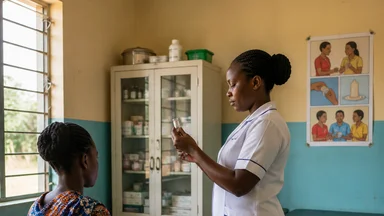
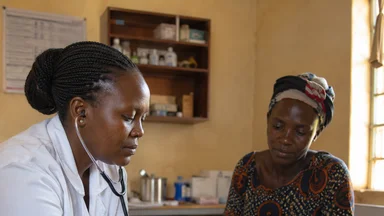
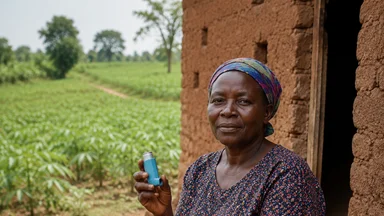
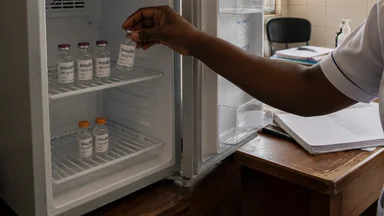
On a Tuesday morning in late August 2024, Margaret Akinyi, a nurse at Nyamira Dispensary in Siaya County, western Kenya, held her stethoscope to the chest of a two-year-old girl who had been coughing for four days. The child's mother said she had been breathing fast and refusing to eat. Akinyi listened for crackles, watched for the telltale heave of the chest wall, and counted breaths for a full minute. She had no pulse oximeter to measure oxygen saturation. The device that could tell her, in seconds, whether this child was hypoxic and needed urgent oxygen — it broke six months ago, and no replacement had arrived.
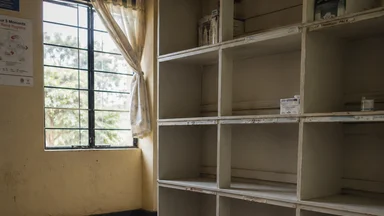
Her experience is not unusual. Across Kenya's rural public health facilities, pulse oximeters — small, clip-on sensors that estimate blood oxygen levels — are scarce or nonfunctional. Nurses diagnose pneumonia largely by sound, sight, and manual counting. The World Health Organization has estimated that tens of thousands of oximeters are missing from low-income counties in sub-Saharan Africa. In Kenya, a 2024 survey of primary health centers found that fewer than one in five had a functioning pulse oximeter. The result, according to a growing body of evidence, is that hypoxic children are frequently missed until they are critically ill, and pneumonia mortality remains stubbornly high.
Pneumonia kills roughly 700,000 children under five each year globally, most of them in Africa and South Asia. Hypoxia — low blood oxygen — is the strongest predictor of death. When oxygen is given early, mortality can drop sharply. But without oximetry, hypoxia is invisible until the child shows visible distress: blue lips, gasping, unconsciousness. By then, the window for effective treatment has narrowed. A 2023 Cochrane review of 12 randomized trials found that routine oximetry reduced in-hospital mortality from childhood pneumonia by roughly one-third, yet the devices remain absent from the majority of the facilities where the deaths occur.
A Stethoscope and a Guess: Diagnosing Pneumonia Without a Pulse Oximeter
When a child arrives at a rural clinic with cough and difficulty breathing, the nurse's diagnostic toolkit is limited. The WHO's Integrated Management of Childhood Illness (IMCI) guidelines recommend checking for fast breathing, chest indrawing, stridor, and grunting — clinical signs that can be assessed without equipment. Nurses are trained to count respiratory rate for 60 seconds using a timer or watch. They listen for crackles with a stethoscope, feel for fever, and look for nasal flaring. These signs, however, are not specific to hypoxia. A child may have fast breathing from fever or distress and still have normal oxygen levels. Conversely, a child with severe hypoxia may appear calm before suddenly deteriorating.
A 2024 study conducted in Kilifi County, Kenya, found that nurses using only clinical signs missed roughly 40% of hypoxic children — those with oxygen saturation below 90% — who were later identified by oximetry in a research setting. The study's lead author, Dr. Grace Mwangi, told me that the missed children often appeared stable: they were not blue, they were not struggling visibly. “The nurses were doing everything by the book,” she said. “But the book does not include a measurement that the nurse does not have.”
The consequences are stark. Hypoxic children who are not identified and given oxygen are at high risk of respiratory failure and death. In the Kilifi study, the mortality rate among missed hypoxic children was nearly three times that of children correctly identified as needing oxygen. The nurses themselves are aware of the gap. Several I spoke with in Siaya and Kisumu counties described the frustration of sending a child home after a clinical assessment, only to have the mother return the next day with a child who is barely breathing. “You feel it in your chest,” one nurse said. “You know you missed something, but you had no way to know.”
Oximetry would not solve every case — devices can malfunction, batteries die, and readings can be unreliable in dark skin or poor perfusion — but the evidence is clear that it catches a substantial fraction of hypoxic children who would otherwise be sent home. The WHO has recommended pulse oximetry for all children with pneumonia since 2014. Implementation, however, has lagged far behind policy.
The Device Gap: Why Pulse Oximeters Are Scarce in Rural Facilities
The reasons for the shortage are multiple and interlocking. The first is procurement. Kenya's Medical Supplies Authority (KEMSA) procures most devices for public facilities, but its budget has historically prioritized medicines, vaccines, and consumables over durable equipment. A pulse oximeter costs roughly $20 to $50 — a modest sum for a device that can last years if maintained, but a significant line item when multiplied across thousands of facilities. Donors have stepped in at times, providing free oximeters through programs like the UN Commission on Life-Saving Commodities, but donated devices often break within months. They are not designed for the dust, heat, and humidity of rural clinics, and replacement parts are rarely available.
Another factor is the absence of a national procurement standard. Unlike vaccines, which are procured through a centralized system with quality assurance, pulse oximeters have been bought piecemeal by counties, NGOs, and vertical disease programs. Many devices are low-quality models that fail quickly. A 2022 audit by Kenya's Ministry of Health found that among facilities that had ever received a pulse oximeter, nearly half had a device that was broken or missing. Some facilities reported sharing a single oximeter across 30 or more beds, making routine screening impractical.
The urban-rural divide is stark. In Nairobi's private hospitals, pulse oximeters are standard equipment: one per bed, with backup devices on each ward. Nurses there are trained to use them as part of oxygen titration protocols, and they rarely face a shortage. In rural public facilities, by contrast, a nurse may have to walk to another ward or even another facility to find a functioning oximeter. The disparity mirrors broader inequalities in Kenya's health system, where the wealthiest counties spend roughly four times per capita on health than the poorest. Pneumonia mortality in children under five is estimated at above 10% in some rural public hospitals, compared with under 2% in Nairobi's private sector — a gap driven in part by access to basic monitoring.
Efforts to close the device gap have been slow. Kenya's 2023 Essential Supplies List added pulse oximeters as a required item for all primary health facilities, a step that should have triggered procurement. But as of late 2024, only about 15% of facilities were stocked, according to a spot check by the Kenya Medical Practitioners and Dentists Union. Supply chain managers cite budget constraints and competing priorities. “We know oximeters are important,” one official told me, “but when we have to choose between a device and a medicine that saves lives today, the medicine wins.”
Clinical Workaround: Audible Clues and Counting Breaths
In the absence of devices, nurses have developed workarounds. Many are skilled at detecting grunting — a sound made by a child trying to keep airways open — or nasal flaring, which signals increased effort to breathe. Chest indrawing, a visible pulling in of the lower chest wall, is a classic sign of severe pneumonia. Nurses learn these signs during their training and in IMCI courses, which emphasize clinical examination over technology. The system is designed to function without equipment, and in some ways it does: a well-trained nurse can identify many cases of pneumonia using only her senses.
The problem is that these signs are not reliably linked to hypoxia. A child with mild pneumonia may have chest indrawing but normal oxygen levels; a child with severe hypoxia may have no indrawing at all. Respiratory rate, counted manually, varies with age, fever, and activity, and inter-rater reliability among nurses is moderate at best. A 2021 study in western Kenya found that two nurses counting the same child's breaths often differed by five or more breaths per minute, enough to change the classification from normal to fast breathing. “We are doing our best,” one nurse said, “but our best is not the same as a machine that gives a number every time.”
Manual counting also takes time — a full minute per child — which is scarce in busy clinics where a single nurse may see 50 or more children per day. In practice, many nurses estimate the respiratory rate rather than counting precisely, introducing further error. The combination of missed hypoxia and misclassification means that some children are given antibiotics and sent home when they need oxygen, while others are referred to hospital unnecessarily, burdening families with transport costs and lost wages.
Training can help, but it is not a substitute for tools. Even the best-trained nurse cannot hear hypoxia. The WHO has long recommended that clinical assessment be supplemented by pulse oximetry, and that training programs include device use. Yet in Kenya, most IMCI courses still do not include practical training on oximeters. Refresher courses are rare. A 2023 evaluation of pneumonia management in 12 Kenyan counties found that fewer than 30% of nurses had ever received formal instruction on how to use a pulse oximeter or interpret its readings. “We train them on the signs, we train them on the drugs, but we don't train them on the device they don't have,” one Ministry of Health trainer said. “It's a chicken-and-egg problem.”
The Wealth Gradient: Pulse Oximetry in Nairobi's Private Hospitals
To understand what is lost in rural facilities, it is useful to look at what happens when oximetry is routine. At the Aga Khan University Hospital in Nairobi, every pediatric bed has a pulse oximeter. Nurses check oxygen saturation on admission and then every four hours — or more frequently if the child is on oxygen. Protocols specify when to start oxygen, when to wean, and when to escalate care. The nurses are trained on these protocols and are audited on compliance. The result is a system where hypoxia is detected early and managed aggressively. Mortality from childhood pneumonia at the hospital is below 2%.
Dr. Sarah Kiptoo, a pediatrician at the hospital, told me that oximetry has become second nature. “We don't think about it as a special intervention,” she said. “It's just part of the vital signs, like temperature or heart rate. If a child's saturation drops, we know within minutes, and we act.” The same is true in other private hospitals in Nairobi, where devices are abundant and maintenance is handled by biomedical engineering teams. The contrast with rural facilities, where a nurse may have to decide whether to refer a child based on a manual count and a hunch, is stark.
The wealth gradient is not unique to Kenya. Across sub-Saharan Africa, the same pattern holds: private and urban facilities have the devices; public and rural facilities do not. A 2022 survey by the WHO across 12 African countries found that pulse oximeters were present in 89% of tertiary hospitals but only 12% of primary health centers. The gap is as much about maintenance and training as about initial procurement. A device that arrives without batteries, without a charger, and without someone to fix it when it breaks is a device that will soon be useless.
Some efforts are being made to bridge the gap. Solar-rechargeable pulse oximeters, designed for off-grid clinics, have been piloted in several countries, including Kenya. The devices are more robust than standard models and can be charged using a small solar panel. Early results from a pilot in Turkana County, one of Kenya's most remote regions, showed that the oximeters remained functional after 12 months, compared with a failure rate of over 50% for standard devices in the same setting. Scaling such innovations, however, requires investment and political will.
Training vs. Tools: Where Kenya's Health System Invests
Kenya's health system invests heavily in training. Nurses receive at least three years of diploma or degree training, and many complete additional courses in IMCI, emergency triage, and newborn care. The curriculum covers pneumonia in depth: causes, signs, treatment, and referral criteria. Nurses are taught to be thorough and careful, to use their clinical judgment when tests are unavailable. This emphasis on clinical skills is appropriate — in many settings, it is all they have — but it can also create a false sense of security. A nurse who is confident in her ability to detect pneumonia by sound may not realize how many hypoxic children she misses.
The problem is not a lack of training but a misalignment between training and tools. Nurses are trained to use clinical signs as a proxy for hypoxia, but the proxy is imperfect. They are not trained to use oximeters because the devices are rarely available. And when a device does appear, there is often no one to teach them how to use it. A 2024 study in a companion article on WHO protocols found a similar pattern with dengue care in Bangladesh: guidelines existed, training existed, but the tools and enforcement did not. The same dynamic plays out with pneumonia in Kenya.
Some argue that training should be prioritized over devices, on the grounds that nurses can save lives even without technology. But the evidence suggests that training alone is not enough. A randomized trial in Malawi found that even after intensive training on IMCI, nurses still missed hypoxia at high rates when oximeters were not used. Training and tools are complementary, not substitutes. The WHO's 2023 guidelines on pneumonia management explicitly state that pulse oximetry should be available at all levels of care, and that health workers should be trained in its use.
Kenya's Ministry of Health has updated its own guidelines to reflect this, but the gap between policy and practice remains wide. A 2025 audit by the Kenya Health Information System found that only 22% of facilities had a trained nurse who could demonstrate correct oximeter use, even among those that had a device. The missing piece is not just the device but a system that ensures devices are procured, maintained, and paired with training. Without that system, even well-trained nurses work blind.
Policy Fixes That Could Close the Gap
Several policy changes could reduce the pulse oximeter gap in Kenya. The most straightforward is to bundle oximeters with pneumonia medicines in KEMSA's procurement. If every facility that receives amoxicillin dispersible tablets also received a pulse oximeter and a supply of batteries, the device would reach the point of care. Some countries, including Ethiopia and Rwanda, have done this successfully, using a simple procurement mechanism that pairs a low-cost device with a high-volume medicine. The cost per facility is roughly $30, a fraction of the cost of treating a single severe pneumonia case.
Another approach is to task-shift oximetry to community health workers. In Kenya, community health workers are already deployed to diagnose and treat childhood illnesses in villages, using clinical algorithms. Adding a handheld pulse oximeter to their kit could help them identify hypoxic children earlier and refer them faster. A pilot program in Homa Bay County, supported by UNICEF, found that community health workers using oximeters detected twice as many hypoxic children as those using clinical signs alone. The devices were simple to use and required minimal training. Scaling this model nationally would require investment in training and device distribution, but the potential impact on mortality is substantial.
Solar-rechargeable oximeters offer a solution to the maintenance problem. Unlike standard devices that rely on disposable batteries, solar models can be recharged using sunlight, which is abundant in most of Kenya. They are also more durable, with fewer moving parts. Several manufacturers now produce solar oximeters specifically for low-resource settings, and the cost has fallen to around $40 per device. Kenya's Ministry of Health has included solar oximeters in its 2024–2028 medical device plan, but procurement has not yet begun. A similar pattern is seen in other countries: as with community health worker pay caps in Mozambique, policy adoption does not always translate into implementation.
Finally, the health system could invest in biomedical engineering capacity at the county level. Many oximeters break because they are not maintained: batteries are not replaced, sensors are not cleaned, and devices are dropped. A single technician trained to repair oximeters could serve a network of 20 facilities, keeping devices functional for years. Kenya has a few biomedical engineering programs, but they are concentrated in Nairobi and Mombasa. Decentralizing this expertise would be a relatively low-cost investment with a high return in device longevity.
What Evidence Says vs. What Clinicians Do: A Persistent Disconnect
The evidence that pulse oximetry saves lives is robust. Implementation science, however, shows that evidence alone does not change practice. Even when oximeters are available, they are not always used. A study in Kenyan hospitals found that among children with pneumonia who had an oximeter available, only about half had a documented oxygen saturation reading. The reasons included lack of time, lack of training, and a belief that clinical judgment was sufficient.
Nurses I spoke with expressed a desire for oximeters but also a wariness. Some worried that reliance on a device would erode their clinical skills. Others pointed out that devices can give false readings, especially in children with dark skin or poor perfusion — a known limitation of pulse oximetry that has received increased attention in recent years. “I don't trust the machine completely,” one nurse said. “I still use my ears and my eyes.” That skepticism is not unreasonable, but it can also be a barrier to adoption. The challenge is to integrate oximetry into clinical practice without undermining the clinical skills that remain essential when devices fail.
The disconnect between evidence and practice is not unique to Kenya. In Bangladesh, as reported in a related article on dengue protocols, WHO guidelines on fluid management have been available for years but are not consistently followed. The same pattern repeats: evidence is generated, guidelines are written, training is conducted, but the tools and systems needed to implement them are not put in place. The result is a persistent gap between what could be achieved and what is achieved.
Closing that gap will require more than procurement. It will require a shift in how the health system thinks about devices: not as optional add-ons but as essential tools, as fundamental as stethoscopes or thermometers. It will require training that is tied to device availability, maintenance systems that keep devices functional, and accountability mechanisms that ensure devices are used. The evidence is clear on what works, but the trade-offs are real. Every dollar spent on oximeters is a dollar not spent on vaccines, antimalarials, or staff salaries. In a constrained budget, the choice is not between a good intervention and a bad one — it is between multiple good interventions, each with its own evidence base and its own advocates. The question is not simply whether the political will exists, but whether the health system can balance competing priorities without leaving the most vulnerable behind.