Pediatric Dengue Case Fatality Rates Persist as WHO Protocols Sit Unused in Bangladesh
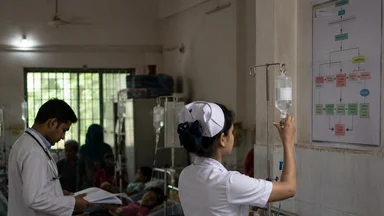
In the pediatric dengue wards of Dhaka, the scene repeats with grim regularity each monsoon season. A child arrives in shock, hours after warning signs were missed at a primary clinic. Intravenous fluids are started, but monitoring is inconsistent. By the time a physician recognizes fluid overload, the damage is done. The death is recorded as "severe dengue with complications." But many of these deaths, clinicians and researchers say, are preventable.
Bangladesh experienced a record 101,000 dengue cases in 2023, and the case fatality rate (CFR) among children hovered around 0.5%—five times the World Health Organization's target of below 0.1%. The WHO has had severe dengue management guidelines since 2009, and Bangladesh issued its own national protocols in 2021, closely mirroring those recommendations. Yet in practice, adherence is sporadic at best.
This is not a story of resource scarcity alone. It is a story of an implementation gap—a chasm between what evidence says works and what clinicians actually do. And it is a gap that costs lives, year after year.
The Gap Between Protocol and Practice in Dhaka's Dengue Wards
The WHO's 2009 dengue guidelines were a landmark. They introduced a classification of dengue with and without warning signs, and severe dengue, replacing the older system of dengue fever, dengue hemorrhagic fever, and dengue shock syndrome. The goal was to help clinicians at all levels identify patients at risk of deterioration and manage fluids judiciously. The recommendations are straightforward: monitor vital signs hourly, measure urine output, and adjust isotonic fluids based on hematocrit and clinical status.
In Bangladesh, these guidelines were adapted into a national protocol in 2021, complete with color-coded triage charts and fluid calculation tables. But a 2024 survey of 12 major hospitals in Dhaka found that only 20% of wards had the protocol posted. Among junior doctors—who rotate every few months and often staff the dengue wards at night—fewer than half could correctly describe the fluid management algorithm for a child with compensated shock.
Clinicians cite work overload as a primary barrier. During peak dengue season, a single resident may be responsible for 30 or more inpatients. In such conditions, checking urine output every hour becomes impractical. But the problem runs deeper than workload. A qualitative study published in 2023 noted that many doctors view the protocol as "for reference only" and rely on clinical intuition instead. When asked why they deviate, common responses include "the patient looked stable" or "we've always done it this way."
The result is a systematic failure to recognize deterioration early. In a review of 50 pediatric dengue deaths at Dhaka Medical College Hospital in 2024, researchers judged that 60% were potentially preventable with better adherence to the WHO protocol. The most common errors were delayed fluid resuscitation, excessive crystalloid boluses, and failure to escalate care when warning signs appeared.
Why a Cheap, Proven Intervention Fails at the Bedside
Strict isotonic fluid replacement monitoring is one of the cheapest and most effective interventions in severe dengue. A bag of Ringer's lactate costs roughly US$ 1. A urine collection bag adds pennies. Yet the evidence shows that these simple tools are often used incorrectly or not at all.
The WHO recommends that children with severe dengue receive an initial bolus of 10–20 ml/kg over one hour, then be reassessed. If shock persists, a second bolus is given, and then maintenance fluids are titrated based on hematocrit and urine output. The goal is to avoid both under-resuscitation and fluid overload, which can lead to pulmonary edema or compartment syndrome.
In practice, clinicians often give larger or faster boluses, especially when under pressure. A 2022 audit in three Dhaka hospitals found that 40% of children with dengue shock received boluses exceeding 30 ml/kg in the first hour. Inappropriate crystalloid boluses were associated with a 2.5-fold increase in the odds of fluid overload and death.
The root cause is not a lack of supplies. Bangladesh has adequate stocks of Ringer's lactate and normal saline. The problem lies in triage and monitoring. Many hospitals lack a system to flag severe cases upon arrival. Children are admitted to general wards where nursing ratios are low, and fluid charts are often incomplete. A 2019 study in Indonesia reported similar adherence gaps, with only 30% of severe dengue cases receiving guideline-concordant fluid management. The pattern is depressingly consistent across low- and middle-income settings.
Interventions that address this gap are deceptively simple. Structured triage tools, real-time data dashboards, and simple checklists have been shown to reduce inappropriate crystalloid boluses by half. But these tools require buy-in from clinical teams and a willingness to change habits.
The Human Cost of a Broken Referral Chain
Even when protocols are known, the referral system in Bangladesh often fails children before they reach a specialist center. The country's healthcare system is fragmented: primary care clinics, private practitioners, and public hospitals operate in silos. There is no centralized coordination for dengue cases, and no enforcement of referral guidelines.
A 2024 analysis of 200 pediatric dengue deaths found that the median time from first healthcare contact to death was 12 hours. In many cases, children were transferred between two or three facilities before arriving at a hospital capable of managing severe dengue. One case involved a 4-year-old girl who presented to a community clinic with vomiting and abdominal pain—warning signs of severe dengue. She was referred to a district hospital, but the ambulance did not arrive for three hours. By the time she reached the district hospital, she was in hypotensive shock. She died en route to Dhaka.
Private clinics, which are often the first point of care for middle-class families, frequently refuse to admit pediatric dengue cases, citing lack of expertise or fear of litigation. This delays care and shifts the burden to already overwhelmed public hospitals. The national referral protocol exists—it specifies which patients should be transferred, by what means, and to which facility—but there is no enforcement mechanism. Hospitals are not penalized for refusing transfers, and there is no central bed management system.
The result is a chaotic system where outcomes depend on a family's ability to navigate the system, not on clinical need. Children who arrive at a tertiary center in the afternoon have better survival than those who arrive at night, simply because daytime staffing is higher.
One might argue that the referral chain is a logistical problem that could be solved with better coordination. Indeed, some countries have implemented centralized hotlines for bed management and ambulance dispatch. In Sri Lanka, for example, a national dengue control unit coordinates transfers and ensures that severe cases are directed to designated hospitals with pediatric intensive care. Bangladesh has discussed similar measures, but they have not been implemented at scale. The result is a system that amplifies inequities: families with resources can bypass the public referral chain by going directly to private hospitals, while poorer families are stuck in a slow, unpredictable process.
What the Evidence Says About Better Outcomes
Despite these challenges, there is robust evidence that simple, low-cost interventions can dramatically reduce dengue mortality. A structured triage tool, developed by the WHO and tested in several Asian countries, reduced the CFR by 40% in pilot sites. The tool uses a color-coded algorithm to classify patients into green (observe), yellow (admit), and red (intensive care) categories, with clear triggers for escalation.
In Thailand, a nationwide rollout of a similar triage system, combined with mandatory training for all ward doctors every two years, helped bring the pediatric dengue CFR down to 0.08% by 2015. That is a 10-fold reduction from levels seen in the 1990s. The Thai approach also included centralized pediatric dengue units in Bangkok and regional hubs, ensuring that severe cases were managed by experienced teams.
Bangladesh tried a similar model in 2018, establishing a pediatric dengue unit at Dhaka Shishu Hospital. For two years, the unit functioned as a referral hub, with dedicated staff and a streamlined triage process. The CFR among admitted children dropped to 0.2%. But when international funding ended in 2020, the hospital could not sustain the unit. Staff were reassigned, and the unit reverted to a general pediatric ward.
The cost per life saved with these interventions is estimated at under US$ 500—a fraction of what is spent on ICU care for a single child. The WHO's 2024 dengue toolkit includes these exact tools, but they remain underused in Bangladesh.
Critics might point out that Thailand's success is not easily replicable, given its higher healthcare spending per capita and stronger primary care infrastructure. That is a valid concern. However, the Mymensingh example (discussed later) shows that even with limited resources, targeted changes can yield significant improvements. The question is not whether it is possible, but whether the political will exists to sustain such efforts.
Why National Protocols Sit Unused
Bangladesh's own 2021 dengue guidelines are comprehensive and evidence-based. They include the WHO's classification system, fluid management algorithms, and criteria for referral. But the gap between policy and practice persists for several reasons.
First, dissemination is weak. The guidelines were published online and printed in limited quantities, but only 20% of hospitals had them posted in wards as of 2024. Many doctors said they were unaware of the guidelines or had never seen a copy. Second, the high turnover of junior doctors—who rotate every 2–3 months—undermines protocol familiarity. Each new cohort must be trained from scratch, and training is often ad hoc.
Third, there is no regular audit or feedback mechanism. Hospitals do not routinely track adherence to the protocol or report outcomes. Without data, it is impossible to identify gaps or hold clinicians accountable. The political attention on dengue spikes only during outbreak years, when cases and deaths make headlines. In between, the issue fades from public discourse, and funding for training and monitoring dries up.
Finally, there is a cultural dimension. Many senior clinicians are skeptical of "cookbook medicine" and prefer to rely on their experience. They may view protocols as overly rigid or irrelevant to their specific patient population. Changing this mindset requires sustained engagement, not just a one-time training.
There is also a tension between standardization and clinical autonomy. Protocols are designed to reduce variability, but they can be perceived as a threat to professional judgment. Some doctors argue that every patient is different, and that guidelines cannot account for the nuances of individual cases. While this is true to some extent, the evidence suggests that in the case of dengue, protocol adherence saves lives. The challenge is to strike a balance: protocols should be seen as a safety net, not a straitjacket.
Lessons from a Neighbor That Got It Right
Thailand's success in reducing dengue mortality offers a stark contrast. The country's CFR fell from 0.4% in the early 2000s to 0.08% by 2015, and it has remained low since. How did they do it?
Key elements included mandatory training for all doctors working in dengue wards, repeated every two years. The training was hands-on, using simulation and case discussions, not just lectures. Thailand also established centralized pediatric dengue units in Bangkok and regional hospitals, each with a dedicated team of nurses and physicians who manage severe cases year-round. This concentration of expertise improved outcomes and served as a training ground for staff from other hospitals.
Bangladesh attempted a similar model in 2018 with the pediatric dengue unit at Dhaka Shishu Hospital. The unit showed promising results, but it was defunded after two years. The difference between the two countries is not just money—it is sustained political will. In Thailand, dengue control has been a national priority for decades, with consistent funding and leadership. In Bangladesh, attention and resources fluctuate with case numbers.
There are signs of change. The Bangladeshi Ministry of Health has announced plans to establish regional dengue centers, but implementation has been slow. Without a long-term commitment, the gains from pilot projects are likely to be lost.
Another neighbor, Sri Lanka, offers a different lesson. The country reduced its pediatric dengue CFR from around 0.3% in 2012 to below 0.1% by 2017, largely through a combination of standardized training, a national dengue hotline for clinicians, and a network of designated treatment centers. Sri Lanka's approach was less resource-intensive than Thailand's but still required coordination and accountability. Bangladesh could learn from both models, adapting elements that fit its own context.
Closing the Implementation Gap: One Hospital's Fix
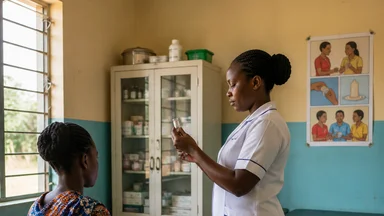
Amid the national inertia, one hospital has shown that change is possible without a large budget. Mymensingh Medical College, a public hospital north of Dhaka, introduced a nurse-led triage system for pediatric dengue in 2022. The change was simple: instead of waiting for a doctor to assess every child, trained nurses used a standardized checklist to classify patients within 30 minutes of arrival. Severe cases were flagged immediately and moved to a dedicated observation area.
The results were striking. In the 18 months after implementation, the pediatric dengue CFR dropped from 0.7% to 0.3%. The number of children who received inappropriate fluid boluses fell by half. The intervention required no extra budget—only a reallocation of existing staff roles and a two-day training session for nurses.
But scaling this model has been difficult. Senior doctors at other hospitals have resisted delegating triage to nurses, arguing that it is beyond their scope of practice. Others worry that nurses will miss subtle signs of deterioration. These are legitimate concerns, but they can be addressed with proper training and oversight. The Mymensingh experience suggests that the benefits outweigh the risks.
There is also a question of sustainability. The nurse-led triage at Mymensingh was championed by a single motivated physician who has since left the hospital. Without institutionalization, the gains may erode. This highlights the need for systemic changes—such as embedding the triage protocol into hospital accreditation standards—rather than relying on individual champions.
Another barrier is the hierarchical culture in many Bangladeshi hospitals, where nurses are often not empowered to make independent decisions. Changing this dynamic requires not only training but also a shift in attitudes. Some hospitals have started to involve nurses in dengue management committees, giving them a voice in protocol design and quality improvement. These small steps can build trust and demonstrate the value of task-shifting.
The broader lesson is that implementation gaps are not solved by publishing more guidelines. They require changes in workflow, accountability, and culture. And they require persistence—the kind that outlasts a single outbreak season.
This article is for informational purposes only and does not constitute medical advice. Readers should consult qualified healthcare professionals for clinical decisions.