Prior Authorization Delays Chemotherapy by Two Weeks in São Paulo Public Hospitals
The Administrative Hurdle That Delays Cancer Care
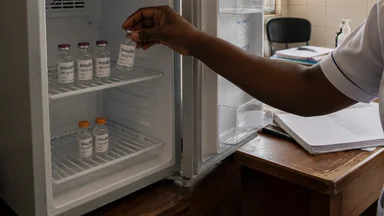
When Maria, a 52-year-old schoolteacher in São Paulo, was diagnosed with breast cancer in early 2025, her oncologist prescribed trastuzumab combined with a taxane. The regimen is standard for HER2-positive disease. But before the hospital pharmacy could dispense the drug, the case had to go through prior authorization—a review by the state health secretariat to confirm that the treatment matched the approved formulary. That process took 18 days. Maria's first chemotherapy infusion arrived more than two weeks later than clinically recommended. For some cancers, that window can matter.
Maria is not alone. A survey of 200 patients at three large public hospitals in São Paulo city, conducted by a local patient advocacy group and published in early 2026, found that 73% reported delays between a prescription and the first dose of chemotherapy. The average wait was 14 days. In roughly one in five cases, the delay exceeded three weeks. Oncologists in the public system have long complained that the administrative step—designed to control costs—has become a de facto rationing mechanism that prioritizes budget discipline over patient outcomes. This article examines how prior authorization works in São Paulo's public hospitals, what it means for patients, and whether the trade-off between cost savings and clinical harm is being properly evaluated.
How Prior Authorization Works in São Paulo's Public System
In Brazil's unified health system (SUS), oncology drugs are procured and distributed by state health secretariats. When a physician prescribes a chemotherapy agent—especially a newer, higher-cost biologic like trastuzumab, bevacizumab, or pembrolizumab—the hospital must submit a request to the secretariat's pharmacy review board. The board checks whether the drug is listed on the state's standardized oncology formulary, whether the diagnosis matches the approved indication, and whether the dosing schedule aligns with clinical protocols. If the request is incomplete or the drug is not on the formulary, the board may deny or suspend it, triggering an appeal process that can take additional days or weeks.
In theory, the review is supposed to be completed within 72 hours. In practice, the average turnaround time in São Paulo's public hospitals is closer to 14 days, according to the survey. Delays are often due to missing documentation, such as biopsy reports or imaging results that the secretariat requires to confirm the cancer stage. But oncologists say that even complete requests can languish because the review board is understaffed. A 2024 report by the São Paulo State Audit Court found that the oncology pharmacy unit had only 12 pharmacists reviewing requests for the entire metropolitan region, which serves roughly 12 million people through public hospitals. The report recommended hiring additional staff, but as of early 2026, the unit had expanded to only 15 pharmacists.
Patient Stories: The Human Cost of Waiting
Carlos, a 61-year-old retired construction worker, was diagnosed with metastatic colorectal cancer in late 2024. His oncologist recommended FOLFOX plus bevacizumab, a standard first-line regimen. The prior authorization request for bevacizumab—a monoclonal antibody that costs roughly R$ 8,000 per cycle—was submitted on a Friday. The secretariat's review board did not process it until the following Thursday, citing a backlog. By the time the drug was approved, Carlos's scheduled infusion date had passed. He had to wait another week for the next available slot in the chemotherapy unit. In total, 19 days elapsed between prescription and infusion. During that time, Carlos experienced worsening abdominal pain and fatigue. His oncologist later noted that the delay may have contributed to a decline in his performance status, which can affect treatment tolerance and outcomes.
Another patient, Ana, a 45-year-old administrative assistant with early-stage triple-negative breast cancer, faced a different problem: her prior authorization request was denied because the secretariat's reviewer flagged that her tumor had not been tested for PD-L1 expression—a requirement for pembrolizumab, which is approved for PD-L1-positive triple-negative breast cancer. The test had been ordered but the results were not yet available. The denial forced Ana's oncologist to start a different chemotherapy regimen (carboplatin and gemcitabine) while waiting for the PD-L1 result. By the time the result came back positive, Ana had already completed two cycles of the alternative regimen. Switching to pembrolizumab later may have been less effective, as the benefit of immunotherapy is greatest when given early in the treatment course. Ana's case illustrates how rigid prior authorization criteria can force suboptimal sequencing, even when the intended therapy is eventually deemed appropriate.
Data on Delays: Survey Findings and Hospital Records
The patient advocacy group's survey, which included 200 patients from three large public hospitals (Hospital das Clínicas, Hospital São Paulo, and Hospital do Servidor Público Estadual), found that the median delay was 14 days, with a range of 5 to 42 days. Among patients who experienced delays longer than 21 days (about 18% of the sample), the most common reasons cited were missing documentation (41%), backlog at the secretariat (33%), and formulary disputes (26%). Formulary disputes occurred when the prescribed drug was not on the standard list, requiring a special authorization that could take up to three weeks. In some cases, the secretariat required the hospital to submit a formal request for an off-formulary drug, including a justification signed by the hospital's pharmacy director and the head of oncology. This multi-step process added an average of 10 days to the approval time.
A separate analysis of pharmacy records from Hospital das Clínicas, covering roughly 1,200 chemotherapy starts in 2025, showed that 68% of patients experienced a delay of at least 7 days between prescription and infusion. The mean delay was 12.3 days. Importantly, the analysis found that delays were longer for drugs that cost more than R$ 5,000 per cycle (mean 16.1 days) compared with drugs costing less (mean 9.8 days). This pattern suggests that cost containment is a driving factor: higher-cost drugs receive more scrutiny, which translates into longer wait times.
The Cost Savings Argument: What the State Spends and Saves
The state health secretariat of São Paulo has defended prior authorization as a necessary cost-control measure. In a 2025 budget report, the secretariat stated that prior authorization reduced oncology drug spending by approximately 12% compared to projected spending without the review process. This translated to an estimated savings of R$ 180 million (roughly US$ 36 million) in that fiscal year. The savings came from several sources: denial of inappropriate prescriptions (e.g., off-label use without evidence), substitution of lower-cost generics when clinically appropriate, and reduction in waste from drugs that were ordered but not administered due to patient deterioration or death.
However, critics argue that the 12% figure may overstate net savings because it does not account for downstream costs. When chemotherapy is delayed, patients may experience disease progression that requires more intensive—and more expensive—treatment later. Emergency department visits and hospitalizations for uncontrolled symptoms (pain, infection, organ dysfunction) can offset the upfront drug savings. A 2024 study from the University of São Paulo's School of Medicine modeled the economic impact of a 14-day delay in first-line chemotherapy for breast and colorectal cancer. The model estimated that for every 100 patients delayed, there would be an additional 12 emergency visits and 4 hospitalizations within 30 days, costing the system roughly R$ 80,000 (about US$ 16,000). If these costs are extrapolated to the roughly 8,000 new cancer patients starting chemotherapy each year in São Paulo's public hospitals, the total annual downstream cost could reach R$ 6.4 million—partially offsetting the R$ 180 million in drug savings.
Trade-Offs and Unintended Consequences
The tension between cost control and timely access is not unique to São Paulo. Prior authorization is widely used in health systems around the world, including in the United States, where it has been criticized for causing delays in cancer care. A 2023 study in the Journal of Clinical Oncology found that prior authorization delayed chemotherapy by an average of 11 days in a large US cancer center, and that delays were associated with a 5% increase in emergency department visits. The São Paulo experience mirrors these findings, but with a key difference: in Brazil's public system, patients have no alternative payer. They cannot switch to a private plan or appeal to a different insurer. The state health secretariat is the sole gatekeeper, and its decisions are final unless a patient or physician files a formal complaint with the public prosecutor's office—a process that can take months.
Some oncologists argue that the current prior authorization system is fundamentally flawed because it treats all chemotherapy drugs as interchangeable commodities, ignoring the clinical nuances of cancer care. For example, two drugs may be listed as alternatives for the same cancer type, but one may have a better side-effect profile or be more effective in a specific molecular subtype. The formulary review process cannot easily account for these subtleties, leading to denials that may be clinically inappropriate. In a 2025 survey of 50 oncologists at São Paulo public hospitals, 78% said that prior authorization had forced them to prescribe a less preferred regimen at least once in the previous year. The most common reason was that the preferred drug was not on the formulary or required special authorization that would cause unacceptable delay.
Another unintended consequence is the administrative burden on hospital staff. Nurses and pharmacists spend hours each week tracking down missing documents, calling the secretariat, and resubmitting requests. A time-motion study at Hospital São Paulo in 2025 estimated that oncology nurses spent an average of 45 minutes per patient on prior authorization tasks, and pharmacists spent 30 minutes. For a hospital that starts chemotherapy for 50 new patients per week, that translates to roughly 62 hours of staff time—time that could be spent on direct patient care. The study estimated the cost of this administrative labor at R$ 150,000 per year for that single hospital.
Reform Proposals: Automatic Approval and Streamlined Formularies
In response to growing criticism, the São Paulo state health secretariat has proposed several reforms. The most prominent is a policy of automatic approval for chemotherapy regimens that follow nationally endorsed clinical guidelines, such as those published by the Brazilian Society of Clinical Oncology. Under this proposal, if a physician prescribes a regimen that exactly matches a guideline-recommended protocol, the prior authorization would be waived, and the hospital would be allowed to dispense the drug immediately. For regimens that deviate from guidelines—for example, due to a patient's comorbidities or prior treatment history—the physician would need to submit a brief justification, which would be reviewed within 48 hours.
This approach is similar to the "gold card" program used by some US insurers, where physicians who consistently prescribe within guidelines are exempted from prior authorization. In Brazil, a pilot program at Hospital das Clínicas tested automatic approval for three common breast cancer regimens (doxorubicin-cyclophosphamide, paclitaxel-trastuzumab, and docetaxel-cyclophosphamide) over a six-month period in 2025. The results were promising: the average delay from prescription to infusion dropped from 14 days to 3 days, and there was no increase in inappropriate prescribing, as measured by an independent audit of 100 randomly selected cases. The secretariat has not yet committed to expanding the program system-wide, citing concerns about budget impact and the need for additional audits.
Another reform proposal is to expand the oncology formulary to include more drugs, thereby reducing the number of cases that require special authorization. Currently, the São Paulo state formulary lists about 40 chemotherapy agents, compared to more than 100 approved by the Brazilian National Health Surveillance Agency (ANVISA). Oncologists argue that the formulary is outdated and does not reflect current treatment standards. For example, the formulary includes older drugs like cyclophosphamide and methotrexate but omits newer targeted therapies like palbociclib and osimertinib, which are standard for certain cancers. Expanding the formulary would increase drug costs in the short term, but could reduce administrative costs and improve patient outcomes.
Counter-Arguments: Why Prior Authorization May Be Necessary
Not everyone agrees that prior authorization should be eliminated. Some health economists argue that without some form of cost control, the public system would be unable to afford the rising prices of new cancer drugs, which often cost R$ 10,000 to R$ 30,000 per month. Brazil's SUS operates under a fixed budget, and spending on oncology has grown by an average of 15% per year over the past decade. If all prescriptions were automatically approved, the secretariat might be forced to ration care in other ways—for example, by limiting the number of patients who can receive treatment or by cutting services in other areas.
There is also the risk of fraud and inappropriate prescribing. Prior authorization acts as a check against physicians who might prescribe expensive drugs for off-label uses that lack evidence of benefit. In a 2024 audit by the São Paulo State Comptroller's Office, 8% of prior authorization requests were found to be for indications not supported by clinical guidelines, and 3% were for drugs that were not appropriate for the patient's cancer type. Without prior authorization, these inappropriate prescriptions would have been filled, wasting public funds and potentially harming patients.
However, advocates for reform counter that the current system is too blunt. They argue that the 8% inappropriate rate could be addressed through post-prescription audits and penalties, rather than pre-approval delays that affect all patients. They also note that the cost savings from prior authorization are modest compared to the total oncology budget, and that the administrative burden and clinical harm may outweigh the benefits.
What Needs to Change: A Path Forward
The evidence from São Paulo suggests that prior authorization, as currently implemented, causes clinically meaningful delays in chemotherapy initiation for a majority of patients. While the policy saves money on drug costs, it also generates downstream costs from emergency visits and hospitalizations, and it imposes a significant administrative burden on hospital staff. The trade-off between cost control and timely access is real, but it is not being properly evaluated because the secretariat does not routinely track outcomes like time to treatment initiation, emergency department visits, or patient satisfaction.
To move forward, the secretariat should adopt a more nuanced approach that balances cost control with clinical need. Automatic approval for guideline-concordant regimens, as piloted at Hospital das Clínicas, is a promising step that could reduce delays for the majority of patients without increasing inappropriate prescribing. At the same time, the secretariat should invest in more staff for the review board to handle complex cases quickly, and it should expand the formulary to include newer drugs that are now standard of care. Finally, the secretariat should implement a system to monitor the impact of prior authorization on patient outcomes, so that the policy can be adjusted based on real-world data rather than assumptions.
For patients like Maria and Carlos, these reforms cannot come soon enough. Maria eventually started trastuzumab, but not before her tumor had grown slightly on imaging. Carlos's disease progressed during the delay, and he required a more intensive second-line regimen. Both patients are now stable, but their oncologists wonder if the weeks of waiting made a difference. In a system where every day counts, an administrative process that adds two weeks to the start of treatment is not a neutral act. It is a clinical decision, made not by a doctor but by a bureaucrat. And until the system recognizes that, patients will continue to pay the price.