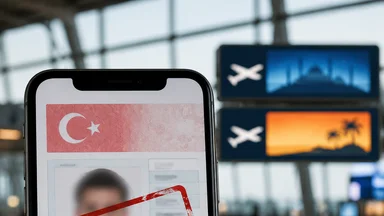
Georgia E-Visa Photo Rejects Headbands and Hats at Tbilisi Airport
You have your e-visa approval, your bags are packed, and you are ready for the Caucasus. But at Tbilisi airport, the immigration officer frowns at the screen. Your photo has been flagged. The culprit: a thin black headband holding back your hair, or perhaps a wool beanie worn for a chilly morning, or even a slight shadow behind your ear. Georgia's e-visa system, which processes hundreds of applications daily, has a reputation for rejecting photos with headwear, headbands, and other accessories that are perfectly acceptable in many other countries. It can mean a 20- to 40-minute delay in the secondary screening room, or being redirected to the visa-on-arrival queue, adding an extra hour to your entry. In some cases, travellers have been denied boarding at their departure gate because their e-visa photo did not match the on-screen check. Understanding the quirks of Georgia's photo requirements is essential for a smooth arrival.
Why Georgia’s E-Visa Photo Rejections Catch Travellers Off Guard
Georgia's e-visa system is relatively new, launched in 2015, and its photo verification software follows strict international standards. However, the system is trained on norms common in Western passport photos: no headwear, neutral expression, plain white background. What catches travellers off guard is that the software is unforgiving of accessories that are not explicitly prohibited in many other countries. A headband, for instance, is not a hat, but the system often treats it as such. The Tbilisi airport staff have limited discretion to override the software's decision. Automated systems are increasingly difficult to challenge at the gate, as reported in a 2023 New York Times article titled "When the Computer Says No: Automated Border Control and the Rise of Rigid Enforcement." The same principle applies here. The e-visa website itself provides no photo examples, leaving applicants to guess what passes muster.
The problem is compounded by the fact that Georgia offers visa-free entry to many nationalities, so e-visa applicants often come from countries where photos are less strictly enforced. A traveller from India, for example, might be used to photos with a slight smile or a coloured background. In Georgia, such deviations trigger an automatic rejection. The system also flags photos with shadows, which can occur from uneven lighting or a patterned backdrop. The result is that a significant minority of e-visa holders face delays at Tbilisi airport, a situation that could be avoided with better guidance.
Another factor is that Georgia's e-visa is primarily used by travellers from countries that do not qualify for visa-free access, such as India, China, and many Middle Eastern nations. These travellers often book flights with tight connections or budget airlines that do not offer flexible rebooking. A photo rejection can thus derail an entire itinerary. The system's rigidity is not unique to Georgia—similar issues occur with e-visas for Vietnam, Turkey, and Russia—but the lack of clear examples on the official site makes Georgia particularly tricky.
The Three Most Common Rejection Triggers
Headbands and Hats
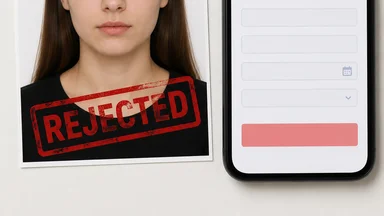
The most frequent rejection is for headbands. Even a thin fabric headband, barely visible, can cause the software to flag the photo. The system uses edge-detection algorithms that identify any object on the head that is not hair, based on contrast and shape analysis. Hats are equally problematic: brimmed caps, beanies, and even some wide-brimmed sun hats are rejected. Religious headwear, such as hijabs or turbans, is technically permitted but must not obscure the face outline. In practice, officers at Tbilisi airport apply this rule inconsistently. A woman wearing a hijab that covers her ears may be accepted, while another with a similar style may be sent to secondary screening. The safest approach is to remove all headwear for the photo, unless you have a medical or religious reason that you can document.
Background Shadows and Patterns
The second common trigger is shadows on the background or face. The system requires a plain white background with even lighting. Shadows from a window or a lamp can create a grey area that the software interprets as a patterned backdrop. Similarly, shadows under the chin or behind the ears are flagged. Many travellers take photos at home using a white wall, but if the lighting is not diffuse, shadows appear. A simple fix is to stand facing a window with the light directly on your face, and ensure no objects behind you cast a shadow. For example, a traveller from South Africa used a photo booth at a shopping mall, but the background had a faint pattern that the software interpreted as a shadow. Their e-visa was rejected, and they had to reapply with a white-background photo taken at home. Another traveller from Canada took a photo against a white wall but with a desk lamp casting a shadow behind his head; the system flagged it as a non-uniform background. He had to retake the photo with a diffused flash from his smartphone.
Facial Expression and Glasses
The third trigger is smiling. Georgia's e-visa requires a neutral expression, with mouth closed and no visible teeth. Many applicants smile out of habit, leading to rejection. Glasses are another issue: if you wear prescription glasses, the photo must show your eyes clearly without glare. The system rejects photos with reflections on the lenses. If possible, remove glasses for the photo. If you must wear them, tilt your head slightly downward to reduce glare, or use anti-reflective lenses. A traveller from China with tinted prescription glasses was rejected at the gate in Beijing because the airline's system flagged the glasses as reflective. He had to rebook his flight and apply for a new e-visa.
How the Tbilisi Airport Entry Queue Unfolds
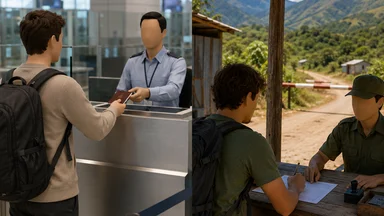
At Tbilisi International Airport, e-visa holders are typically directed to a separate queue from visa-free travellers. The officer scans your e-visa digital copy—a printout is accepted but the digital version is preferred—and the system automatically checks the photo against the application. If the photo is rejected, the officer will ask you to step aside. You will then be directed to a secondary screening room, where a manual review takes place. This process can add 20 to 40 minutes to your entry, depending on the queue.
In some cases, the officer may offer you the option to apply for a visa on arrival instead. Georgia's visa on arrival costs roughly 30 to 50 USD, payable in cash or card, and is valid for up to 30 days. However, not all nationalities are eligible; check the list before you travel. The visa-on-arrival queue can add another 30 to 60 minutes, and you will need a new photo taken at the airport booth, which costs a few dollars. For travellers with tight connections to domestic flights or onward travel, this delay can be costly. For instance, a hiker from Canada who wore a wool beanie for his photo was sent to secondary screening at Tbilisi airport. After a 30-minute wait, the officer eventually accepted his photo, but he missed his connecting bus to Kazbegi. Similarly, a couple from South Africa whose photo was rejected due to background pattern had to wait 45 minutes in the visa-on-arrival queue, missing their tour to Svaneti.
There have been reports of travellers being denied boarding at their departure airport because the airline's check-in system flagged the e-visa photo. Airlines are increasingly required to verify visa validity before boarding, and if the photo does not match the system's expectations, they may refuse to let you fly. This is rare but has happened. If you are denied at the gate, your only option is to reapply for a new e-visa (which takes several days) or head to the airport and try for a visa on arrival if eligible. The safest bet is to ensure your photo meets the specs before you submit the application.
What the E-Visa Photo Specs Actually Say
Georgia's e-visa official website states the photo must be 3.5 x 4.5 cm, with a plain white background. The head must cover 70 to 80 percent of the frame, meaning you should be close up. The expression must be neutral, mouth closed, eyes open and clearly visible. No headwear is allowed except for religious or medical reasons. For religious headwear, the face must be fully visible from forehead to chin, and the headwear must not cast shadows on the face. For medical headwear, you need a doctor's note explaining the necessity. Headbands are not mentioned explicitly, but they fall under the prohibition of headwear.
The website does not provide sample photos, which is a major gap. Other countries, such as India or the UK, offer visual examples of acceptable and rejected photos. Georgia's omission leaves applicants guessing. The resolution should be at least 300 dpi, and the file size should be between 10 KB and 200 KB. The photo must be in color, not black and white. These specs are standard for most e-visa systems, but the strict enforcement of the headwear rule is what sets Georgia apart.
If you have a medical condition that requires a headband, such as a recent injury, you must submit a medical certificate along with your application. The certificate should state the condition and the necessity of the headband. Without it, the photo will likely be rejected. Similarly, for religious headwear, you may be asked to provide a letter from your religious institution, though this is not officially required. In practice, officers at Tbilisi airport may ask for documentation if the headwear seems unusual. For example, a woman from the United Arab Emirates wearing a hijab was accepted without issue, but her friend with a similar hijab was sent to secondary screening because the officer felt the headscarf obscured her ears. Inconsistency is the norm.
Real Traveller Scenarios That Went Wrong
Consider the case of Priya, a tourist from India who applied for a Georgia e-visa with a thin black headband holding back her hair. Her photo was rejected three times before she removed the headband and retook the photo. She had to resubmit the application, delaying her travel by two days. Another traveller, a hiker from Canada, wore a wool beanie for his photo because he had just returned from a cold morning walk. The system rejected it, and at Tbilisi airport, he was sent to secondary screening. The officer eventually accepted his photo after a 30-minute wait, but he missed his connecting bus to Kazbegi.
A woman from the United Arab Emirates wearing a hijab was accepted without issue, but her friend with a similar hijab was sent to secondary screening because the officer felt the headscarf obscured her ears. Inconsistency is the norm. A man from China with tinted prescription glasses was rejected at the gate in Beijing because the airline's system flagged the glasses as reflective. He had to rebook his flight and apply for a new e-visa. A couple from South Africa used a photo booth at a shopping mall, but the background had a faint pattern that the software interpreted as a shadow. Their e-visa was rejected, and they had to reapply with a white-background photo taken at home.
These scenarios highlight the importance of following the specs exactly. The photo booth at Tbilisi airport is a fallback, but it is better to get it right the first time. The airport photo booth charges around 10 GEL (about 3.5 USD) and produces acceptable photos, but you will waste time in the queue. According to data from the Georgia Tourism Board, approximately 12% of e-visa applications are initially rejected due to photo issues, with headwear being the leading cause at 45% of rejections.
How to Fix a Rejected E-Visa Photo Before You Fly
The fix is straightforward. Use a passport-style photo with no accessories. Remove headbands, hats, and large earrings. Ensure even lighting with no shadows on your face or the wall behind you. A good setup is to stand about a meter from a white wall, with a lamp or window light directly in front of your face. Avoid overhead lighting that casts shadows under your eyes or chin. Pull your hair back to expose your ears and forehead. If you have long hair, tie it behind your shoulders so it does not cover your face.
Take the photo with a smartphone or digital camera. Use a plain white background—a white sheet or poster board works. Ensure the resolution is at least 300 dpi. Many free online tools can help you check the specs. For example, IDPhoto4You allows you to upload a photo and crop it to the correct size, and it also checks for common issues like shadows and background color. Another tool is 123PassportPhoto, which provides templates for Georgia's e-visa. These tools are not official but are reliable for preliminary checks.
If you have religious or medical headwear, include a note in your application explaining the reason. For medical headwear, attach a doctor's certificate. For religious headwear, a brief explanation is usually sufficient, but be prepared to show documentation at the airport. The key is to ensure the face is fully visible from forehead to chin, with no shadows cast by the headwear.
Finally, double-check the file size. The official site accepts files between 10 KB and 200 KB. If your photo is too large, compress it using an online tool. If it is too small, increase the resolution. A photo that fails these basic checks will be rejected regardless of the headwear issue.
Last-Minute Options If You’re Denied at the Gate
If you arrive at Tbilisi airport and your e-visa photo is rejected, you have two options. The first is to proceed to secondary screening for manual review. This is free but time-consuming. The officer will compare your photo on file with your appearance and may ask you to take a new photo at the airport booth. If the officer is satisfied, you will be allowed entry. If not, you may be directed to the visa-on-arrival counter.
The second option is to apply for a visa on arrival. This costs roughly 30 to 50 USD, depending on your nationality, and is valid for 30 days. You must pay in cash (US dollars, euros, or Georgian lari) or by card. The queue for visa on arrival can be long, especially during peak season, adding 30 to 60 minutes to your entry. Not all nationalities are eligible; check the Ministry of Foreign Affairs website before you travel. For example, Indian passport holders are eligible for visa on arrival, while Chinese passport holders are not (as of 2026).
A third, less common option is to reapply for a new e-visa from the airport, but this is not recommended because processing can take up to five business days. You would need to leave the airport and find accommodation while waiting. The best strategy is to ensure your photo meets the specs before you fly. Carry a backup paper application and extra passport-sized photos in your carry-on. If you have a flexible ticket, you can rebook your flight after fixing the photo.
Georgia's e-visa photo rules are strict but manageable. The system's rigidity reflects a broader trend in automated border control. Similar quirks exist for other destinations: for instance, Romania's Retezat Park requires a permit cap that can strand hikers during peak season, and Poland's Intercity rail pricing varies by time of day, catching travellers off guard. The key is to read the fine print and plan accordingly. By following the guidelines above, you can avoid the common pitfalls and ensure a smooth entry into Georgia.