Istanbul Spice Bazaar Scales Tilt for Tourists After 11 AM
Every travel guide to Istanbul tells you to visit the Spice Bazaar, haggle for a pashmina, and buy a box of Turkish delight. Most of them are wrong about the details. The Mısır Çarşısı, as locals call it, is a working market that shifts character completely after 11 AM. Before that hour, the scales tip in favor of the buyer. After it, the crowds and the prices tilt toward the tourist. Here is what that means for your wallet, your stomach, and your ability to walk away with something you actually want.
The Morning-Only Market: Why 11 AM Is the Cutoff
The Spice Bazaar opens around 7 AM, but the real action happens between 7 and 9 AM. That is when restaurant owners and home cooks from the surrounding neighborhoods come to buy their weekly cumin, red pepper flakes, and dried mint. They move fast, they buy in bulk, and they know exactly which vendor gives them a fair kilo price. The vendors, in turn, are still in wholesale mode. They quote prices in lira per kilogram, not per 100 grams, and they do not waste time trying to upsell you on saffron or pistachio paste.
By 10:30 AM, the cruise-ship passengers start trickling in from the Eminönü dock. The vendors switch to English, the prices on the display bins lose their tags, and the same 100-gram bag of pul biber that cost 15 lira at 8 AM now costs 25. I observed this on a Tuesday in late October. A vendor I had spoken with at 8:30 quoted me 60 lira for a small bag of dried figs. At 11:15, he quoted a French couple 90 lira for the same bag. They paid without blinking.
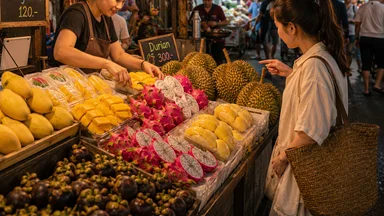
If you want saffron, go before 9 AM. The good stuff—deep red threads from Iran, not the pale yellow stems—is usually kept behind the counter. Early in the morning, vendors will let you smell and taste it. After 11, they are too busy to bother, and they may try to sell you safflower petals dyed with food coloring instead. The same pricing pattern applies to dried figs, apricots, and mulberries. Early morning, you can sample freely. Late morning, the samples disappear and the prices climb 20 to 40 percent.
One exception: the spice wholesalers on the outer streets, which I will get to later, keep their prices stable all day. But inside the main L-shaped arcade, the morning discount is real and measurable. If you arrive at noon, you are paying the tourist tax, whether you know it or not.
Payment Reality: Lira vs. Euro vs. Card
Most stalls inside the Spice Bazaar are cash-only, especially before noon. Card terminals exist, but they are often hidden under the counter, and some vendors will claim the machine is broken if you ask to use it. The ones that do accept cards may add a surcharge of 3 to 5 percent, which they blame on the bank. This is not unique to the Spice Bazaar—small businesses across Turkey do the same—but it is more common here than in the nearby Grand Bazaar, where card acceptance is almost universal.
Some vendors will gladly accept euros, but at their own exchange rate. In late 2024, that rate was roughly 10 percent below the market rate. A vendor might quote you 10 euros for something that costs 200 lira, when the actual exchange rate would make it about 180 lira. That 10 percent markup is their profit on the currency conversion. If you pay in lira, you avoid it entirely. The same goes for US dollars and British pounds. Carry small lira notes—20, 50, and 100—because vendors often claim they do not have change for a 200-lira note.
ATMs near the Eminönü tram stop and the Galata Bridge charge withdrawal fees of around 20 to 30 lira per transaction, plus whatever your home bank charges. Some ATMs in the area belong to foreign-owned banks that offer better rates, but they are less common. Withdraw enough cash for the morning before you enter the bazaar, because once you are inside, the nearest fee-free ATM is a five-minute walk back to the tram station.
A note on digital wallets: Apple Pay and Google Pay are not widely accepted inside the bazaar. Even at stalls that have a card terminal, contactless payments may not work, or the vendor may not know how to process them. If you rely on your phone for payments, you will struggle. Carry physical cash, and keep it in a front pocket or a money belt.
Hygiene Cues Locals Actually Use
Travel guides often warn about food safety in Istanbul markets, but they rarely give specific cues. Locals use a handful of visual checks that take two seconds and tell you more than any Yelp review. The first is the spice cover. Vendors who keep their open spice bins covered with a clean cloth or a glass lid are signaling that they care about dust, insects, and the general grime of the bazaar. If the cloth looks stained or the lid is missing, move on.
Second, look at how dried fruit is stored. The best vendors keep apricots, figs, and mulberries in glass jars with tight lids, not in open wooden crates. Open crates attract fruit flies, and once fruit flies get into dried fruit, the eggs are nearly invisible. If you see tiny flies hovering over the nuts or dried fruit, skip that stall entirely. The eggs could hatch in your luggage, though this is rare.
Third, watch for gloves. Many vendors now wear disposable gloves when handling food that will be weighed and bagged. This is a relatively new practice, and not all vendors do it, but those who do are usually the ones who also keep their counters clean. If a vendor handles nuts with bare hands and then touches money, the hygiene chain is broken. That does not mean the food is unsafe—Turkish digestive systems are robust—but if you have a sensitive stomach, it is a risk.
Fourth, avoid stalls with open honey buckets. Honey is a big seller at the bazaar, but open buckets collect dust and, occasionally, dead insects. Reputable vendors sell honey in sealed jars. The same goes for olive oil: buy it in a sealed tin or a dark glass bottle, not from a barrel where you cannot see the fill level or the sediment.
One more cue: the presence of cats. Stray cats roam the bazaar freely, and many vendors feed them. A cat sitting on a spice sack is not a dealbreaker—locals are used to it—but if a cat is walking on the counter where food is prepared, that is a sign that the vendor does not enforce basic separation between animals and food. Use your judgment.
What Conventional Guides Get Wrong
Most English-language guides tell you to bargain hard at the Spice Bazaar. This is bad advice. Locals do not bargain at the spice market. They pay the posted kilo price, or they walk to the next stall. Bargaining is expected at the Grand Bazaar, where margins on carpets and jewelry are enormous, but at the Spice Bazaar, the margins on bulk spices are thin. A vendor who quotes you 20 lira for 100 grams of cumin is not padding the price by 50 percent. He is making maybe 2 lira. If you try to haggle him down to 15, he will either refuse or reduce the weight.
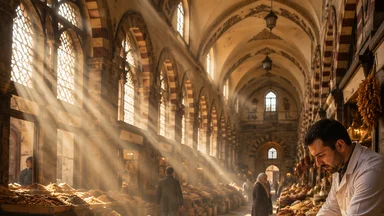
Another common mistake: guides recommend visiting at noon or in the early afternoon, when the bazaar is most alive. That is exactly when the cruise tours arrive, the aisles become impassable, and the vendors switch to tourist pricing. The bazaar is most authentic—and most pleasant—between 7 and 10 AM, when the light streams through the arched windows and the air smells of cumin and dried mint instead of sunscreen and cologne.
Many guides also ignore the ferry-side entrance. The main entrance on Hasırcılar Caddesi is the busiest. But there is a smaller entrance on the side facing the Eminönü ferry dock, near the Yeni Cami mosque. That entrance leads directly to the spice stalls, bypassing the tourist-trap souvenir shops that line the main aisle. Locals use this entrance almost exclusively.
Finally, guides overpraise the name “Egyptian Bazaar” as if it adds historical romance. The bazaar was built in the 1660s with revenues from Egypt, hence the name, but calling it that today feels like a marketing ploy. Locals call it Mısır Çarşısı, which literally means “Egypt Bazaar,” but they use the Turkish name. If you ask for the “Spice Bazaar,” anyone under 40 will know what you mean. If you ask for the “Egyptian Bazaar,” you will sound like you are reading from a 1992 guidebook.
Street Food Logistics: Eat Like a Local
The street food around the Spice Bazaar is excellent, but timing matters. The classic grilled fish sandwich at the Eminönü dock—balık ekmek—is best eaten between 11 AM and 1 PM, when the boats are grilling fresh mackerel and the queues are manageable. After 1 PM, the boats are still grilling, but the bread may have been sitting out, and the fish may have been cooked in batches. Go early for the freshest catch, and eat it standing at the dock, not at the plastic tables where seagulls will steal your fries.
Simit—the sesame-covered bread rings sold from carts—is a breakfast food. By 10 AM, most carts have sold out or the simit has gone stale. If you want a warm simit, buy it from a cart near the Yeni Cami mosque before 9 AM. The carts there get their supply fresh from the bakery every morning. After 10, the simit is still edible, but it will be chewy, not crispy.
Turkish delight, or lokum, is a minefield. The famous shop Haci Bekir, which has been making lokum since 1777, has a branch on the main aisle of the bazaar. Their rose-flavored lokum is excellent, but it is also expensive. The pre-packaged boxes sold at the exit stalls are cheaper, but they are often made with corn syrup instead of sugar, and the texture is rubbery. If you want good lokum, buy it loose from Haci Bekir or from a vendor who lets you taste it first. If the lokum is hard on the outside and soft on the inside, it is fresh. If it is hard all the way through, skip it.
Roasted chestnuts are a winter specialty, sold from wheelbarrow vendors near the tram stop. They are priced by weight, and the price is usually fair. But check that the chestnuts are not burnt on the outside and hollow inside. A good roasted chestnut should peel easily and have a creamy, sweet interior. If the vendor refuses to let you pick your own chestnuts from the pile, that is a red flag.
One drink worth trying is sahlep, a hot milk-based drink thickened with orchid root powder, topped with cinnamon. It is sold at a few tea shops inside the bazaar, mostly in winter. The powdered versions you see in tourist shops are not the same thing; they contain cornstarch and artificial flavoring. Real sahlep is rare and expensive, but the tea shop near the Haci Bekir outlet serves a decent version. Ask for it with extra cinnamon.
The Wholesaler Detour: 100 Meters Behind
The Spice Bazaar is just one L-shaped corridor, but the real treasure is on the streets behind it. Walk out the back entrance on Tahmis Sokak, then turn left onto Çiçek Pazarı Sokak. Within 100 meters, you will find wholesale spice shops that sell to restaurants and hotels. These shops have no display cases, no English signs, and no samples. They sell spices in five-kilogram bags, and they will sell you a single kilogram if you ask. The prices are 30 to 50 percent lower than inside the bazaar.
At one such shop, I bought a kilogram of Urfa pul biber—a dark, smoky red pepper flake from southeastern Turkey—for 80 lira in 2024. Inside the bazaar, the same quantity would have cost at least 150 lira. The wholesaler did not speak English, but he understood kilos and lira. I pointed at the bag, held up one finger, and paid. No bargaining, no photo, no small talk. That is the transaction style here.
The wholesalers also sell sumac, za'atar, dried mint, and whole cumin seeds at prices that make the bazaar look like a tourist trap. The quality is often better, because the spices turn over faster—restaurants buy in bulk, so the stock is fresh. Inside the bazaar, some spices sit on the shelf for weeks. If you are serious about cooking, and you have room in your luggage, this detour is worth the five extra minutes.
One caveat: the wholesalers do not package for travel. They will put your spice in a plastic bag and twist the top. If you are flying, double-bag the spices and seal them in a ziplock to avoid spills. Also, do not expect to take photos. The wholesalers are not set up for tourists, and some will wave you away if you point a camera. Keep your phone in your pocket, buy your spices, and leave.
Seasonal Variations: What to Buy and When
Istanbul's markets shift with the seasons, and the Spice Bazaar is no exception. In spring, around March and April, fresh herbs like mint and parsley appear in abundance, but dried herbs from the previous harvest are still available at lower prices. This is a good time to buy dried oregano and thyme, as the new crop hasn't yet arrived and vendors are clearing old stock. In summer, from June to August, the bazaar is heavy with dried fruits—apricots, figs, and mulberries from the recent harvest. Prices for these items drop by about 15 percent compared to winter, because supply is high. However, the heat and humidity can affect spice quality; look for vendors who store spices in shaded, cool areas. Autumn, particularly September and October, is the peak season for saffron and chestnuts. Saffron from Iran arrives fresh, and vendors are more willing to negotiate on bulk purchases. Winter, from November to February, is when sahlep and honey are in demand. Honey from the Black Sea region, often sold in sealed jars, is at its best after the summer harvest. Seasonal buying not only saves money but also ensures you get the freshest products.
Another seasonal consideration is the tourist volume. The bazaar is busiest from April to October, when cruise ships dock daily. During these months, the morning window for local prices is even shorter—by 10 AM, the crowds swell. In winter, from November to March, the bazaar is quieter, and vendors are more relaxed. Prices may not drop, but you have more room to browse and sample without pressure. If you visit in winter, you can arrive as late as 10 AM and still find reasonable prices, though the best deals remain before 9 AM.
Your Takeaway Checklist for the Bazaar
If you only remember one thing from this article, let it be this: arrive by 8 AM on a weekday. The bazaar is open daily except Sunday, but Tuesday through Thursday are the quietest days. Saturday is a zoo. Sunday, the bazaar is closed, but the surrounding streets are open and some wholesalers operate. If you arrive by 8, you will have the place nearly to yourself, the vendors will be in wholesale mode, and you can buy your spices before the cruise ships dock.
Second, skip the main aisle. Use the side entrance near the Yeni Cami mosque, or enter from the ferry dock. The main aisle is where the souvenir shops and the pushy vendors are. The side aisles have the same spices, often at better prices, because the rent is lower and the vendors are less accustomed to tourists.
Third, buy spices in bulk from the wholesalers on Tahmis Sokak or Çiçek Pazarı Sokak. For occasional use, small quantities from inside the bazaar are fine, but for the best value, walk the extra 100 meters. You will save enough to buy a good meal at the fish dock.
Fourth, pay in lira. Avoid card surcharges and bad exchange rates by carrying enough cash for the morning. Withdraw from an ATM near the tram station, not inside the bazaar. Keep small notes for easy change.
Fifth, try a sahlep drink from a local tea shop, but only if it is winter. In summer, opt for ayran—a salty yogurt drink—which is sold everywhere and is a better match for the heat. And if you see a vendor selling pomegranate juice from a press, buy it. It is not always fresh, but when it is, it is one of the best things you will taste in Istanbul.
The Spice Bazaar is not a museum. It is a working market that happens to be 350 years old. Treat it with the same respect you would give a neighborhood market in your own city: go early, buy what you need, and do not get distracted by the shiny things. The vendors are not trying to cheat you; they are trying to make a living. If you meet them on their terms—early, in cash, in lira—you will both walk away satisfied.