Osaka Kuromon Market Shifts Lunch Prices Down by 12:30 PM
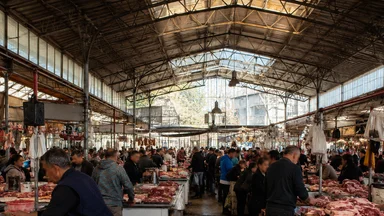
Osaka's Kuromon Market runs about 580 meters from Nipponbashi to the Sennichimae area, under a covered arcade that shelters shoppers from rain and summer heat. Most travelers wander in around 11 AM, snap photos of giant crab legs and skewered eel, and leave with a full belly but a lighter wallet. What they miss is the quiet shift that happens around 12:30 PM, when handwritten price tags get revised downward and the serious lunch crowd arrives.
Why Kuromon Market Prices Drop Before 1 PM
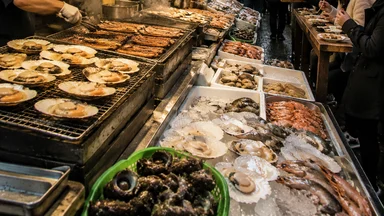
Vendors at Kuromon source their seafood daily from Osaka's Central Wholesale Market, which opens around 5 AM. By late morning, the premium cuts—tuna belly, sea urchin, sweet shrimp—have been on display for hours. Most stalls lack commercial refrigeration strong enough to keep raw fish safe overnight, so anything unsold by early afternoon becomes a liability. The result is a predictable markdown cycle: prized uni (sea urchin) can drop by 20 to 30 percent from its morning price, and grilled scallops often become loss leaders to draw customers toward higher-margin items like skewered wagyu.
One vendor near the market's center, known for its giant scallops grilled in shell, typically reduces its platter price from ¥1,500 to ¥1,000 shortly after noon. Another stall specializing in tuna cuts drops its assorted sashimi bowl from ¥2,000 to ¥1,500. These are not advertised—the new prices are written on small cardboard signs or communicated verbally. Local shoppers who time their lunch run for 12:15 PM routinely pick up deals that tourists arriving at 10 AM never see.
Not everything gets cheaper. Prepared items like takoyaki (octopus balls) and grilled eel skewers hold their price because they are cooked to order and have low waste. The discounts apply mainly to raw seafood sold by weight or by piece. Vendors also negotiate more freely after 1 PM, especially for large portions. A buyer willing to take the last tray of medium-fatty tuna can often shave another 10 percent off the marked price.
The strategy has a downside: selection narrows. By 1:30 PM, the most sought-after items—otoro (fatty tuna belly), fresh scallops, and large sweet shrimp—are often gone. The trade-off is clear: pay full price for the best selection at 10 AM, or accept a smaller range for a lower bill at 12:30 PM. For travelers on a budget, the latter wins most days.
Cash Rules: The Yen-Only Reality
Kuromon Market remains stubbornly cash-oriented. A survey of roughly 50 stalls conducted in late 2024 found that fewer than one in five accept credit cards, and those that do often require a minimum purchase of ¥1,000. International cards are accepted at perhaps a dozen stalls, but the terminals are sometimes finicky with foreign chips. The majority of transactions are settled in yen, and small purchases—¥300 for a skewer, ¥500 for a cup of matcha—are the norm.
ATMs inside 7-Eleven convenience stores accept foreign cards reliably, with a low fee (around ¥110 per withdrawal) and a reasonable exchange rate. There are at least three 7-Eleven branches within a five-minute walk of the market's main entrance. Avoid the currency exchange kiosks inside the market itself; their rates are typically 3 to 5 percent worse than what you get at Osaka Station or a post office.
A coin purse is essential. Many stalls price items at ¥100, ¥300, or ¥500, and handing over a ¥10,000 note for a ¥300 skewer will earn you a polite but exasperated sigh. Break large bills at any convenience store or at the market's few sit-down restaurants, which are more accustomed to handling larger denominations. Some newer stalls have adopted PayPay, a QR-code payment system popular in Japan, but it does not work with international bank accounts or credit cards. Do not count on it.
Carry at least ¥10,000 in small bills—¥1,000 notes are ideal—and a handful of ¥100 and ¥500 coins. This covers a solid lunch for two people, plus a few snacks to take away. If you plan to buy whole crab or a large piece of tuna, add another ¥5,000. The market has no ATMs inside its arcade, so arriving without cash means backtracking to a convenience store.
Three Hygiene Cues Locals Trust
Food safety standards in Japan are high, but market stalls operate with less oversight than restaurants. Locals use three quick visual checks before buying raw seafood. First, look at the ice bins. Fresh ice should be solid and dry; if the bin has a puddle of meltwater at the bottom, the fish has been sitting longer than ideal. Second, watch how the vendor handles money and food. A trustworthy stall uses separate gloves or a dedicated pair of tongs for raw items and handles payment with the other hand or a tray. Third, check for mesh or glass covers over displayed trays. Exposed seafood gathers dust and the occasional fly, and a vendor who leaves trays uncovered is cutting a corner.
Grill smoke is actually a good sign. Stalls that are constantly grilling scallops, eel, or beef have high turnover, meaning their raw stock moves quickly. A stall with a cold grill and a pile of pre-grilled items sitting under a heat lamp is one to skip. Similarly, if you see flies around the raw fish display—and in summer, you sometimes do—walk away. The market's management does some pest control, but individual stall hygiene varies.
Another cue: the vendor's willingness to let you sample. Many stalls offer a small piece of grilled eel or a single scallop to taste. A vendor who hesitates or refuses may be hiding something, though some simply have a no-sample policy. In that case, gauge by the queue. A line of local shoppers—especially older women—is a reliable endorsement. Tourists queue for photo-worthy items; locals queue for quality.
Finally, check the temperature of any cold item you buy. If the surface feels lukewarm, the seafood has been out of refrigeration too long. This is more common in summer, when the market's open arcade traps heat. Buy raw items early in your visit and eat them promptly. Do not carry raw seafood around for more than an hour, even in a cooler bag.
What to Eat and What to Skip
Kuromon Market excels at a few things and is mediocre at others. The must-try items are grilled eel skewer (unagi), sea urchin gunkan (a hand-held sushi roll with uni), and scallops grilled in their shell with butter and soy sauce. These are prepared fresh, have high turnover, and represent the market's best value. A single eel skewer costs around ¥600–¥800, and a uni gunkan runs ¥500–¥1,000 depending on the size of the roe. Grilled scallops are roughly ¥500–¥800 per piece, often sold in pairs.
Sushi platters are a different story. Many stalls sell pre-made sushi sets wrapped in plastic. These are assembled in the morning and sit in a chilled display case all day. By 2 PM, the rice has hardened and the fish has lost its sheen. If you want sushi, go to a dedicated sushi counter—there are a few inside the market—where the chef makes each piece to order. The price is higher (around ¥2,000–¥3,000 for a set of eight), but the quality justifies it.
Takoyaki balls are popular but better purchased from street stalls outside the market. The ones inside Kuromon tend to be pre-made and reheated, with a gummy texture. The takoyaki stalls near Dotonbori, a five-minute walk away, cook each batch fresh and offer more variety in toppings. Similarly, fruit on sticks—peeled grapes, sliced mango, whole strawberries—is visually appealing but overpriced. A stick of five grapes can cost ¥500, which is three times the supermarket price. Skip it unless you need a quick vitamin boost.
Sample before buying large portions. Some stalls offer a small taste of their grilled eel or beef skewer. If they do not, buy one piece first. The flavor and tenderness vary significantly between stalls, and a skewer that looks perfectly charred can be dry or overseasoned. The same applies to crab: whole boiled crab looks impressive but is fiddly to eat standing up, and the meat-to-shell ratio is often disappointing.
The 90-Minute Window Strategy
The optimal approach to Kuromon Market is a tightly timed 90-minute window. Arrive at 11:30 AM, before the lunch crowd peaks. Use the first 30 minutes to walk the entire length of the market without buying anything. Note which stalls have the items you want and which vendors are already marking down prices. This scouting phase is crucial because the market's layout is linear but crowded, and backtracking through dense foot traffic wastes time.
Between noon and 12:30 PM, buy your raw items—tuna, sea urchin, sweet shrimp—while selection is still decent and prices have started to drop. Eat these first, standing at the narrow counters most stalls provide. Do not worry about finding a seat; very few stalls have chairs, and the etiquette is to eat quickly and move on. By 12:45 PM, switch to grilled items: scallops, eel, beef skewers. These are cooked to order and take a few minutes, so factor in the wait. Finish eating by 1 PM, before the tour groups arrive.
Tour groups, mostly from China and Southeast Asia, begin flooding the market around 1:30 PM. They move in packs, block the narrow aisles, and create long queues at popular stalls. The market remains open until 5 PM or later, but the atmosphere changes. If you want a relaxed experience, leave the main strip and explore the side alleys. A few smaller stalls on the parallel streets offer better deals on dried fish, pickled vegetables, and kitchen knives. These are aimed at local cooks, not tourists, and prices are often 10 to 20 percent lower.
The 90-minute window also works because it aligns with the market's natural rhythm. Vendors are attentive in the late morning; by mid-afternoon, some start cleaning their counters and packing up less popular items. You miss the best energy and the best deals if you arrive after 2 PM. For travelers staying in Osaka for several days, a second visit in the evening—around 4 PM—can yield bargains on items vendors do not want to store overnight, but the selection is thin.
Comparing Kuromon to Nishiki Market in Kyoto
Travelers often ask whether to visit Kuromon in Osaka or Nishiki Market in Kyoto. The two are similar in concept—covered arcades lined with food stalls and small restaurants—but differ in character. Nishiki is narrower, quieter, and more focused on preserved foods: pickles, dried fish, miso, and tea. It is sometimes called "Kyoto's pantry" because locals shop there for cooking ingredients. Kuromon is louder, steamier, and more about eating on the spot. The seafood selection at Kuromon is broader and fresher; Nishiki has more vegetable and tofu options.
Hours differ. Nishiki stalls typically close by 5 PM, with many shutting at 4 PM. Kuromon stays open until 5:30 or 6 PM, and some stalls continue grilling until 7 PM on weekends. For lunch, Kuromon is the better choice; for a late-afternoon snack, Nishiki feels rushed. Both markets require a budget of roughly ¥5,000 to ¥7,000 per person for a filling meal that includes several items and a drink. You can spend less by sticking to grilled skewers and skipping the uni.
Do not try to visit both markets in one day. They are about an hour apart by train (from Osaka's Namba station to Kyoto's Shijo station on the Hankyu line), and the experience of rushing from one to the other defeats the purpose of leisurely eating. Pick one market per city. If you have only one day in Osaka, Kuromon is the obvious choice. If you have a full day in Kyoto, Nishiki offers a more relaxed pace and a chance to explore the surrounding shopping streets.
For travelers using a rail pass, the journey between the two cities is straightforward. The JR Kyoto Line connects Osaka Station to Kyoto Station in about 30 minutes, and from Kyoto Station, Nishiki Market is a 15-minute bus ride or a 20-minute walk. Kuromon is a 10-minute walk from Namba Station, which is served by the Nankai, Midosuji, and Sennichimae subway lines. A combined rail and market day is feasible but leaves little time for other sights.
Packing List for Market Day
An empty stomach is the most important item. Arriving hungry ensures you sample broadly and do not fill up on one heavy dish. A small tote bag is useful for carrying packaged items like dried fish or matcha powder, but avoid backpacks in the crowded aisles; they bump into other shoppers and vendors. Hand sanitizer and wet wipes are essential because many stalls do not have hand-washing facilities, and eating with your hands is common for grilled skewers.
Cash, as noted, is critical. Bring ¥10,000 in small bills and a separate stash of coins. A smartphone with Google Translate's camera feature helps decode handwritten signs and ingredient lists. Download the Japanese language pack offline before you arrive, because the market's Wi-Fi is spotty. A reusable chopstick set is a nice addition—some stalls provide disposable chopsticks, but they are flimsy and break easily with grilled eel. A few stalls offer discounts of ¥50–¥100 if you bring your own set.
Do not bring a large suitcase or stroller. The aisles are barely wide enough for two people to pass, and dragging luggage through the market is both impractical and inconsiderate. Most hotels near Namba or Shinsaibashi offer luggage storage, and coin lockers are available at Namba Station. For travelers coming from Kyoto, consider leaving your bag at Osaka Station's coin lockers (around ¥700 for a large locker per day) and taking the subway to Kuromon.
Finally, bring a light jacket or scarf even in summer. The market's covered arcade traps humidity, but the grilled-food stalls produce intense heat, and the temperature swings between the open ends and the center can be uncomfortable. A scarf also doubles as a napkin or a cover for your tote bag if you buy something that leaks. These small preparations make the difference between a chaotic, overheated experience and a relaxed, productive lunch.