Turkey E-Visa Photo Rejects Blurry Edges at Istanbul and Antalya Arrivals
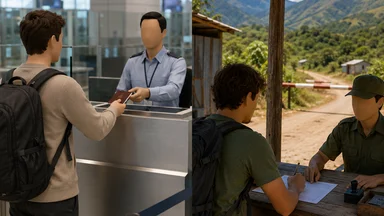
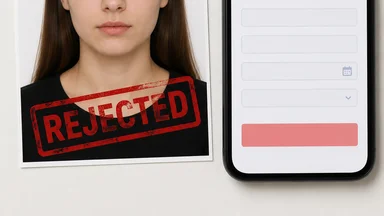
You have your e-visa confirmation printed, your passport ready, and a flight landing in Antalya or Istanbul. Then the officer glances at your photo and slides the paper back. Rejected. The reason: blurry edges, a shadow, or the chin-to-crown ratio is off. This happens more often than many travelers expect, especially at Antalya, where leisure traffic from Gulf states is heavy. The cost is not just time—it is the full visa fee, roughly US$ 35–50 per attempt, with no discount for a second try. Here is how the photo rules work, why some airports reject more than others, and what you can do to avoid the trap.
The 6-Millimeter Blur That Derails Your Trip
Turkey's e-visa system requires a digital photo that meets strict technical specs. The image must be at least 600 x 600 pixels, with the head occupying roughly 50–69% of the frame. Blurry edges—soft focus on the hairline or shoulders—are a top reason for rejection. At Antalya Airport, staff reject an estimated 1 in 8 e-visa photos, according to anecdotal reports from travel forums and visa agencies as of early 2025. This means if you are one of the roughly 2,000 e-visa applicants arriving daily at Antalya during peak season, about 250 will face rejection. The frustration is compounded by the fact that the rejection is often subjective: one officer may pass a photo that another rejects. Travelers on forums like TripAdvisor and FlyerTalk report that even photos taken at certified studios sometimes fail, especially if the studio is unfamiliar with Turkey's specific requirements.
Istanbul Airport processes 40–45% more visa applications than Antalya, but its rejection rate for photo issues is slightly lower, possibly because officers see more business travelers with professional photos. Still, Istanbul officers measure the chin-to-crown ratio precisely. If the face is too small or too large in the frame, the application is flagged. There is no grace margin. A traveler from the UAE reported that his photo was rejected because the top of his hair was cropped by 2 millimeters—an error invisible to the naked eye but caught by the system's automated check. At Istanbul, the automated system pre-screens photos before an officer sees them, so even if the officer might have passed it, the computer rejects it first. This double layer of scrutiny catches many travelers off guard.
When a photo is rejected at the airport, the traveler must reapply online or use a photo booth. The full e-visa fee—typically US$ 35–50 for single-entry—is forfeited. Refunds are processed only if the visa is never issued, but photo rejections count as a completed application, so refunds are rare and may take 3–4 weeks if approved. Reapplication costs the same fee again. For a family of four, this can mean losing US$ 140–200 if all photos fail, and then paying again for each person. Some travelers have tried to dispute the charge with their credit card company, but the Turkish e-visa system is known for fighting chargebacks, and success is not guaranteed. The time lost is also significant: reapplying online takes about 15–20 minutes, plus the wait for approval, which can be instant or take up to an hour during peak times.
Couples traveling together face double the risk. If one photo passes and the other fails, the failed application must be resubmitted separately. There is no partial refund or combined application. The failed traveler pays the full fee again, while the partner's valid visa remains unused until the other is approved. This often means waiting at the airport for the second visa to come through, which can be stressful if you have connecting flights or hotel check-in deadlines. Some couples choose to apply together and hope both pass, while others apply separately to limit the financial damage. The trade-off is that applying separately means two separate payments, each with its own processing time.
Why Antalya Rejects More Photos Than Istanbul
Antalya Airport sees heavy leisure traffic from Gulf states, particularly during summer months. Many travelers apply for e-visas using selfie cameras or automated cropping tools, which produce soft edges or shadows. Antalya's visa officers are trained to spot these errors, and they reject photos more readily than their Istanbul counterparts. A travel agent in Dubai noted that his clients flying to Antalya have a rejection rate of about 15%, compared to 8% for those flying to Istanbul. The difference is partly due to the type of traveler: Antalya attracts more families and first-time visitors who are less familiar with visa photo requirements, while Istanbul sees more frequent flyers who have been through the process before.
Istanbul processes a higher volume of business and transit passengers, who often have professional passport photos. The airport has 12–15 photo booths, compared to Antalya's 3. The queue for a photo retake at Antalya averages 20–30 minutes, while Istanbul's wait is usually under 10 minutes. During peak hours, Antalya's booth line can stretch to 45 minutes. Travelers have reported missing their connecting flights because of the delay. One traveler from Kuwait wrote on a forum that he spent 90 minutes at Antalya trying to get an acceptable photo, only to miss his domestic flight to Cappadocia. He had to buy a new ticket for the next day.
Winter rejection rates drop at both airports, but Antalya's rate remains above Istanbul's. The reason may be seasonal staffing: Antalya hires temporary officers for the summer surge, and they tend to be stricter. Travelers arriving in November or February report fewer rejections, but the rules are enforced year-round. A travel blogger who visited Antalya in January 2025 noted that the officer barely glanced at her photo before approving it, while her friend who visited in July was rejected twice. The inconsistency is frustrating, but the best defense is to have a perfect photo every time.
Another factor is that Antalya's airport infrastructure is older. The photo booths are positioned in dimly lit corridors, and the prints often come out too dark for the e-visa scanner. Staff may direct you to the booth, then reject the print because it does not meet the brightness standard. This catch-22 frustrates many travelers. Some have tried using their phone to take a photo and then printing it at a kiosk, but the print quality is often poor. The booths themselves are not maintained regularly; one traveler reported that the booth's camera had a smudge on the lens, causing every photo to be blurry. He went through three booths before finding one that worked.
The $28–42 Gamble: E-Visa Cost Breakdown
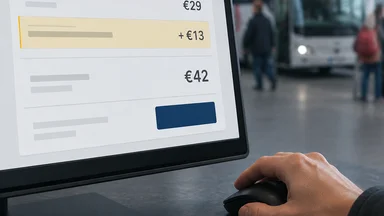
A single-entry Turkey e-visa costs roughly US$ 35–50, depending on your nationality and the exchange rate at the time of application. The multiple-entry option runs about US$ 60–85. These fees are non-refundable if the photo is rejected after payment is processed. For travelers from Gulf countries, the cost can be higher: a single-entry visa for a UAE resident may cost US$ 45–55, while a Jordanian passport holder pays US$ 35–40. The photo rejection risk is the same, but the financial sting is greater for those paying the higher rate. A family of four from Saudi Arabia could lose over US$ 200 if all photos are rejected, and then pay another US$ 200 to reapply.
For a family of four, the total cost for single-entry visas is around US$ 140–200. If one photo fails, that person pays again—an extra US$ 35–50—while the other three wait. Some travelers report applying separately to avoid losing the entire family's fee, but the system does not allow group applications. The trade-off is that applying separately means each person goes through the process individually, which can be time-consuming. A better strategy is to have all photos checked by a professional before applying, but this requires planning ahead.
Photo rejection means the full fee is lost per attempt. There is no discount for reapplication. The official e-visa website states that fees are non-refundable once the application is submitted, even if the photo is rejected. Some credit card chargebacks have succeeded, but the process takes weeks. Travelers have reported that their bank reversed the charge, only to have the Turkish government ban them from future e-visa applications. It is a risky move. The safest approach is to ensure the photo is correct before submitting, which means using a certified studio or a trusted online service that guarantees compliance.
Travelers from Gulf countries often pay a premium because their e-visa fees are higher for certain nationalities. For example, a single-entry visa for a UAE resident may cost US$ 45–55, while a Jordanian passport holder pays US$ 35–40. The photo rejection risk is the same, but the financial sting is greater for those paying the higher rate. Additionally, some nationalities require a multiple-entry visa, which costs more. A multiple-entry visa for a Saudi national can be US$ 80–100, so a rejection means losing a significant amount of money.
Three Photo Rules That Trip Up Gulf Travelers
First, the background must be pure white, with no patterns or gradients. Many Gulf travelers use home photography with a beige wall or curtain, which introduces shadows. The e-visa system detects non-white backgrounds and rejects the photo automatically. Even a slight off-white tone can cause rejection. A traveler from Oman reported that his photo was rejected because the white wall in his home had a faint texture that the system interpreted as a pattern. He had to go to a studio to get a proper photo.
Second, ears must be fully visible. For women wearing a headscarf, the scarf must not cast a shadow on the face or cover the ears. Officers at Antalya are particularly strict about this. A shadow on one side of the face is enough for rejection. Women from Gulf countries often wear headscarves that are loose or have folds that create shadows. The solution is to adjust the scarf so that it is tight against the head and does not cover the ears. Some women have reported being asked to remove their headscarf for the photo, which can be uncomfortable. However, the rules require that the face is fully visible from the hairline to the chin, and the ears must be uncovered. If the scarf covers the ears, the photo will be rejected.
Third, glasses with thick frames are flagged as a glare risk. Even if there is no glare in the photo, the system may reject it. Travelers are advised to remove glasses for the photo, but many forget. The digital file size must be between 60 and 120 KB; larger files are often rejected. Some travelers have tried to compress the file, but if the compression reduces quality, the photo may become blurry. The file size limit is strict, and there is no tolerance. A traveler from Bahrain had his photo rejected because the file was 121 KB, just 1 KB over the limit. He had to resize and reapply.
Selfie cameras produce soft edges because of the wide-angle lens. The face may appear distorted, and the chin-to-crown ratio may be off. The system expects a head-on portrait with even lighting. Gulf travelers who take photos at home with a smartphone often end up in the retake queue. The best practice is to use a rear camera with a tripod, or better yet, go to a professional studio. Some travelers have used online tools to check their photo before applying, but these tools are not always accurate. The official e-visa website has a photo checker, but it is not well-publicized.
The Airport Photo Booth Trap at Istanbul and Antalya
Airport photo booths charge US$ 4–8 per print, cash only, and they accept Turkish lira. At Istanbul, the booths are located near the visa offices; at Antalya, they are in the arrivals hall. The prints are often too dark for the e-visa scanner, which requires a bright, high-contrast image. Staff may direct you to the booth, then reject the print because it does not meet the technical specs. The booth's camera may not be calibrated for the e-visa pixel requirements. Some travelers report going through three or four prints before one passes. Each print costs money, so the cost can add up. One traveler from Qatar spent US$ 24 on prints before getting one that was accepted.
Antalya has only 3 booths, and during peak summer months, the line can be long. Istanbul has 12–15 booths, but they are spread across two terminals. The booths do not accept credit cards, so travelers must have lira cash. Many arrive without local currency and must find an ATM first. The ATMs at the airport often charge high fees, and the exchange rate may be poor. It is better to bring some lira from home or use a travel card that works in Turkish ATMs. Some travelers have tried to use a currency exchange booth, but the rates are usually unfavorable.
A better option is to bring printed passport photos from a certified studio at home. A strip of 4–6 photos costs US$ 6–12 and meets all technical requirements. The airport booth is a last resort, not a reliable solution. If you must use a booth, ask the officer to check the print before you leave the booth. Some officers are willing to do this, but not all. Another tip is to use the photo booth at a Turkish consulate before your trip, but this is not always possible. Some travelers have used a service that sends them a digital photo that meets the specs, which they can then print at a pharmacy or photo shop.
The trade-off between using a booth and bringing your own photos is clear: booths are convenient but unreliable, while bringing your own photos requires planning but is more reliable. For families, the cost of bringing photos is negligible compared to the cost of a rejected visa. A strip of 4 photos costs about the same as one airport booth print, but you get multiple copies and you know they are correct. Some travelers laminate their photos to protect them, but lamination can cause glare if not done properly. It is better to keep them in a protective sleeve.
How Jordan and UAE Systems Compare on Photo Rules
Jordan's e-visa system accepts lower-resolution photos, with a maximum file size of 1 MB, and rejects fewer than 5% of photos. The rules are less strict on background and face size. Travelers from Jordan or those using Jordan as a transit point often find the process smoother. The Jordanian system also allows for manual review by an officer, so borderline photos are more likely to be accepted. In contrast, Turkey's system is automated and unforgiving. A traveler who had his Turkey visa rejected but his Jordan visa approved on the same photo is a common story on forums.
The UAE, on the other hand, has a photo correction service at visa offices in Dubai that charges US$ 20–30 per person. They take the photo on-site and adjust it to meet the specs. Turkey does not offer this service; if your photo is rejected, you must use a booth or reapply online. The UAE's service is expensive but reliable. For Gulf travelers who are used to this convenience, Turkey's lack of a similar service is a shock. Some travelers have suggested that Turkey should introduce a similar service, but as of 2025, there are no plans.
Turkey's system requires exact pixel dimensions with no tolerance. The official website specifies 600 x 600 pixels, but some travelers report that images slightly larger or smaller are accepted. The risk is not worth taking. Jordan and the UAE are more flexible on dimensions and file size. For example, Jordan accepts photos up to 1 MB, while Turkey's limit is 120 KB. This means that a high-quality photo from a DSLR camera may be too large for Turkey but perfectly fine for Jordan. Travelers who frequently visit both countries need to prepare different photos for each.
For Gulf travelers accustomed to the UAE's lenient photo rules, Turkey's strictness comes as a surprise. The difference in rejection rates—Turkey's roughly 12% versus Jordan's under 5%—highlights the need to prepare carefully for a Turkey trip. Some travelers have started using online services that specialize in Turkey e-visa photos, which guarantee compliance. These services cost about US$ 5–10 per photo and are a good investment. They also provide a digital copy that can be used for reapplication if needed.
Packing a Passport-Photo Strip That Actually Works
Bring 4–6 printed copies from a certified studio in your home country. A studio can ensure the white background, proper lighting, and correct dimensions. The cost is US$ 6–12 per strip, a fraction of the cost of a rejected visa. Make sure the studio knows the Turkey e-visa specs. Some studios have templates for different countries, so ask specifically for Turkey. Also, check the photo's file size: if you are applying online, the digital file must be between 60 and 120 KB. The studio can provide both printed and digital versions.
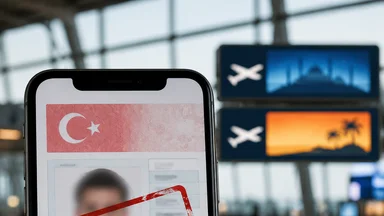
Keep a digital copy on your phone for online reapplication. If your photo is rejected at the airport, you can reapply using the digital file from your phone, provided you have internet access. Some travelers use the airport Wi-Fi to resubmit while in line. The Wi-Fi at Istanbul and Antalya airports is free but may require registration. It is a good idea to have a local SIM card or an international data plan as a backup. The reapplication process takes about 10 minutes, and approval is usually instant. However, during peak hours, it may take up to an hour. Be prepared to wait.
Laminate the prints to survive airport handling. A bent or creased photo may be rejected. Also, check the expiry: photos older than 6 months are often rejected, even if they meet the technical specs. The system flags the file's creation date. Some travelers have had photos rejected because they were taken a year ago, even though their appearance hadn't changed. It is best to get new photos within a month of your trip. For frequent travelers, it is worth getting a new set of photos every 6 months.
For a family trip, bring separate strips for each person. Do not rely on a single strip cut into individual photos, as the cropping may alter the dimensions. Each person should have their own set of 4–6 photos. This simple preparation can save hours of delay and avoid the frustration of a rejected e-visa at the airport. Additionally, keep the photos in a separate pocket from your passport and other documents, so you can hand them to the officer quickly. Some travelers have reported that their photos were rejected because they were wrinkled from being stored in a wallet. A protective sleeve or envelope is a small investment that can prevent this.
Finally, consider using a visa service that checks your photo before you submit. Some travel agencies offer this as part of their service. If you are booking a package tour, ask if they include photo verification. This can save you the hassle of dealing with rejection at the airport. While it adds a small cost, it is worth it for peace of mind. Remember, the goal is to arrive in Turkey without any visa issues, so a little preparation goes a long way.