Peru Visa Math: Tarapoto Overland Entry Vs Lima Airport Paperwork
Peru draws travelers with Machu Picchu, the Amazon, and ceviche, but the first hurdle is often the visa entry process. Most tourists can get a free 90-day tourist stamp, but the experience varies dramatically depending on whether you fly into Lima or cross overland near Tarapoto. This article breaks down the costs, paperwork pitfalls, and strategic trade-offs of each door, drawing on traveler reports and official guidelines that are sometimes out of date. The goal is to help you decide which entry point suits your itinerary—and your tolerance for bureaucratic surprises.
The Two Doors into Peru
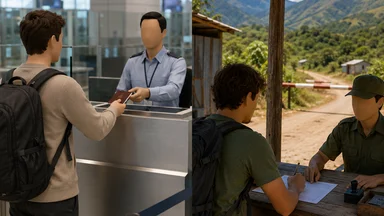
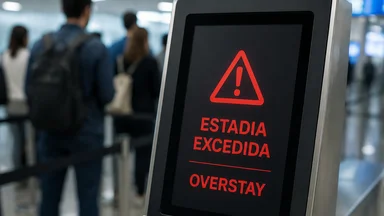
Lima's Jorge Chávez International Airport is the main gateway, processing thousands of arrivals daily. The visa process here is relatively automated: immigration officers scan your passport, ask a few standard questions (purpose of visit, length of stay), and stamp you in. Most nationalities from the US, EU, Canada, Australia, and many Latin American countries receive a 90-day tourist stamp at no cost. The system is predictable, though lines can stretch 45 minutes to an hour during peak hours.
Tarapoto's overland entry, on the other hand, is a quieter but less consistent experience. The border crossing near Yurimaguas or along the Interoceanic Highway sees roughly 200 overland entries per day, according to estimates from migration forums. The same visa rules apply—free tourist stamp for eligible nationalities—but officers here tend to ask more detailed questions about onward travel plans. One traveler on a Facebook group reported a two-hour wait while an officer manually verified their hotel bookings by phone.
The key difference is scrutiny. At Lima airport, the process is streamlined: officers see hundreds of tourists daily and rely on digital records. At Tarapoto, officers may be less familiar with rare nationalities or unusual itineraries, leading to longer delays and more document checks. If your paperwork is shaky, the airport offers a smoother path.
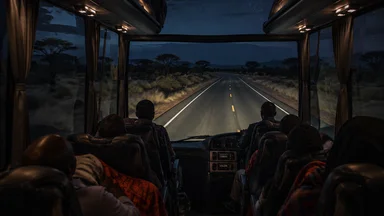
Both doors issue the same 90-day tourist stamp, but the experience of getting it can shape your first impression of Peru. For budget travelers, the overland route saves on airfare but costs time and patience. For those on a tight schedule, Lima's efficiency is worth the premium.
What the Visa Categories Actually Cost
For most tourists, the visa itself is free. Peru does not charge a fee for the 90-day tourist stamp for nationals of the US, EU, Canada, Australia, Japan, South Korea, and many others. This applies equally at Lima airport and Tarapoto overland. However, the total cost of entry includes more than the stamp.
Flying into Lima means paying for an international airfare, which can range from roughly $400 to $1,200 depending on origin and season. Some airlines bundle the airport exit tax into the ticket price, but budget carriers may not. Check your ticket: if not included, you may owe a small fee (around $30–40) when leaving Peru. Overland entry avoids airfare but incurs bus costs. A bus from the border to Tarapoto typically runs $30–50, and from Tarapoto to Lima or the coast adds another $20–40.
Small terminal fees add up at land borders. Some crossings charge a $2–5 infrastructure fee, often payable in soles or US dollars. Carrying small bills helps. At Lima airport, there are no such fees at entry, but you may pay for baggage storage or airport transfers.
Hidden costs also include the price of printed documents. Overland officers often require printed hotel confirmations and onward tickets, which means a trip to an internet café (roughly $1–2) if you don't have a printer. At the airport, digital copies are usually accepted, but it's wise to have backups. Overall, the overland route can save $300–500 on airfare but adds $50–100 in ground transport and incidental fees.
Consider a concrete example: a traveler from New York flying to Lima in high season might pay $900 for a round-trip ticket. The same traveler could fly to Bogotá for $400, then take a bus to the border near Tarapoto for $100, plus another $40 to reach Tarapoto itself. That's $540 total in transport—saving $360. But the bus journey takes roughly three days, versus a direct flight of eight hours. The trade-off is time versus money.
Another example: a couple from London. Two round-trip flights to Lima could cost $2,200. Overland via Brazil might cost $1,200 in flights to Manaus plus $200 in bus fares. That's a $800 saving for two, but the couple will spend four extra days on the road. If they value their time at $100 per day per person, the overland route actually costs more in opportunity cost. This kind of calculation is rarely made explicit, but it matters.
For solo backpackers on a shoestring, the overland route is almost always cheaper. But families or professionals on limited vacation time may find the airport premium worth paying.
Paperwork Pitfalls That Get You Turned Around
The most common reason for visa denial at both doors is missing proof of accommodation. Overland officers are particularly strict: they want a printed hotel booking confirmation that matches your name and dates. Digital copies on a phone are sometimes rejected if the screen is damaged or the file doesn't open. At Lima airport, officers are more lenient and often accept digital versions, but a printed backup is safer.
Another pitfall is the onward ticket requirement. Peru officially requires proof of exit travel within 90 days. Overland, officers may demand to see a printed return flight or bus ticket. One traveler on a forum reported being denied entry at Tarapoto because they planned to exit by bus to Ecuador and had no printed ticket—only a digital confirmation. At Lima airport, showing a flight reservation on your phone is usually sufficient.
The six-month passport validity rule is enforced rigidly at land borders. Your passport must be valid for at least six months from the date of entry. Officers at Tarapoto measure this precisely, and if you're short by even a week, you may be turned away. At Lima airport, the rule is the same but sometimes applied more flexibly for nationals of visa-waiver countries. Still, don't gamble on leniency.
Customs forms are another surprise. At Lima airport, electronic kiosks handle declarations. At land crossings, officers may run out of paper forms, requiring you to write your declaration by hand on a blank sheet. Bring a pen and know the customs rules: you can bring up to $300 in goods duty-free, but electronics and expensive items may be questioned. Some travelers have reported having to pay small duties on laptops or cameras.
A less obvious pitfall is the name mismatch. If your hotel booking is under a different name (e.g., a partner's name), officers may suspect you're not the actual guest. Overland officers have been known to call hotels to verify. To avoid this, ensure all reservations are in your passport name. Also, if you're staying with friends or family, a letter of invitation with their contact details can help. Some travelers carry a copy of their host's ID or utility bill as proof of address.
Proof of sufficient funds is another grey area. While the official rule states you should have at least $1,000 or equivalent per month of stay, enforcement is inconsistent. At Lima airport, it's rarely asked. At Tarapoto, one traveler reported being asked to show a credit card with a visible limit, not just a bank statement. A credit card with a limit of at least $1,000 can serve as informal proof. Carrying a mix of cash and cards is wise.
Why Tarapoto Is the Quiet Test Case
Tarapoto, a city in the San Martín region, is a growing hub for overland travelers crossing from Brazil or Colombia via the Amazon. The border posts here handle a fraction of Lima's volume—some estimates suggest around 200 entries per day compared to Lima's thousands. This lower volume means officers have more time per traveler, for better or worse.
On the positive side, lines are shorter. You can often clear immigration in 10–20 minutes if your documents are in order. But the unpredictability is higher. Officers may not be familiar with passports from less common countries, such as South Africa or India, leading to phone calls to supervisors and waits of up to two hours, as reported on a 2024 travel forum. One traveler noted that the officer asked for proof of sufficient funds—a rule that exists but is rarely enforced at Lima.
Tarapoto's charm is that it's a gateway to the Amazon and the Andes without the crowds. But the visa process here is a test of your preparation. Travelers who arrive with printed documents, a clear itinerary, and patience tend to breeze through. Those who wing it often regret it.
For comparison, Lima airport's efficiency is a double-edged sword: fast processing but long lines during peak hours (6–10 AM and 6–10 PM). If you arrive at 3 AM, you might clear immigration in 5 minutes. If you land at 8 PM, expect a 45-minute wait. Tarapoto's land entry is never crowded, but a single difficult case can back up the line for everyone.
A counter-argument: some travelers prefer the overland route precisely because of the extra scrutiny. They argue that a thorough officer is less likely to miss a stamp or make an error in their passport. At Lima, with high volume, mistakes happen—a wrong entry date or missing stamp can cause problems later. Overland, the slower pace means fewer errors. There's a trade-off between speed and accuracy.
Also, the overland route offers flexibility. If your plans change en route, you can adjust your entry point. For example, if you're coming from Brazil and decide to enter via Assis Brasil instead, you can. Lima is fixed. This flexibility is valuable for long-term travelers whose itineraries evolve.
The Data Gap: How Old Are These Rules?
Peru's official migration website (migraciones.gob.pe) was last updated in 2023, according to its footer. The information on visa requirements is general and does not distinguish between land and air entry. Travel forums like TripAdvisor and Reddit are full of conflicting reports from 2024 and 2025, with some travelers claiming they needed a printed return ticket and others saying digital was fine. The truth likely depends on the officer and the day.
Condé Nast Traveler, in a June 2026 article, focused on Tumi luggage deals—not visa rules. That's typical: mainstream travel media rarely cover entry procedures in detail, leaving travelers to piece together information from blogs and forums. A 2025 post on the Peru Travel subreddit noted that the land border at Desaguadero (south of Tarapoto) started requiring a printed hotel booking for all nationalities, but the same rule wasn't enforced at Lima. No official announcement confirmed this change.
The best strategy is to check multiple sources within three months of your travel. Facebook groups like "Peru Overland Travel" and "Backpacking South America" have recent posts from travelers who crossed in the past few weeks. But remember: one person's smooth entry doesn't guarantee yours. The rules can shift with little notice, especially at land borders.
If you want a reliable fallback, the US State Department's Peru travel page is updated more frequently than Peru's own site, though it focuses on safety rather than visa mechanics. For detailed entry rules, the International Air Transport Association (IATA) database, accessible through airline check-in systems, is the most current—but you can't see it unless you work for an airline.
Another data point: the Peruvian embassy in your home country can provide official answers, but response times vary. Some travelers report waiting weeks for a reply. Calling the embassy directly is faster. If you're in doubt, call the Peruvian consulate in the nearest major city—they often have the most up-to-date information for your nationality.
It's also worth noting that Peru has been moving toward digitalization. In 2025, Lima airport introduced e-gates for some nationalities, but they are not yet available for all. Overland crossings remain paper-based. This gap may widen in the future, making the airport even smoother.
Packing the Right Documents for Either Door
Regardless of which door you choose, carry printed copies of everything. This includes your passport data page, hotel bookings for your entire stay, onward flight or bus ticket, and a recent bank statement (or credit card statement) showing sufficient funds. At land borders, officers may ask to see proof of funds, even if the rule is rarely enforced. A statement with a balance of at least $500–1,000 is a safe bet.
For overland entry, bring a pen. You may need to fill out handwritten immigration or customs forms. Also carry small US dollars or Peruvian soles for terminal fees—bills under $20 are easiest. A photocopy of your passport's entry stamp page can speed things up if the officer needs to record details.
Digital backups are essential but not sufficient. Save scans of your documents on your phone and in cloud storage (Google Drive or Dropbox). If an officer accepts digital copies, great. But if they insist on paper, you'll be glad you have it. Some travelers recommend laminating your passport photocopy to prevent wear.
At Lima airport, you can usually get away with digital copies, but a printed folder of documents costs little and saves headaches. For overland, printed documents are non-negotiable. Also, keep your passport easily accessible—not buried in a backpack—since you'll need it several times during the crossing.
Another tip: if you're entering overland, carry a small notebook with your itinerary written out. Officers sometimes ask for your planned route, and having it written down shows you're organized. Include dates, cities, and accommodation names. This can speed up the process and reduce suspicion.
For families, carry copies of children's birth certificates if they are minors. Even if not required, having them can resolve questions about parental consent if only one parent is traveling. A notarized letter from the other parent is even better, though rarely demanded.
The Bottom Line: Choose Your Entry Based on Risk
Lima airport offers predictability. The visa process is standardized, officers are experienced with tourists, and digital documents are generally accepted. The trade-off is cost and crowds: international flights to Lima are expensive, and peak-hour arrivals can mean long waits. If your paperwork is complete and you prefer efficiency, fly into Lima.
Tarapoto overland entry is cheaper but riskier. You save on airfare and get a more adventurous start to your trip, but the paperwork scrutiny is higher, and the process can be slow if your documents aren't perfect. For budget travelers with time to spare, the overland route is a viable option. But if you have any doubts about your passport validity, hotel bookings, or onward travel, the airport is safer.
Both doors give you the same 90-day tourist stamp with no visa fee for most nationalities. Extensions are not available for tourist stamps, so plan your exit within 90 days. If you overstay, you'll pay a fine of roughly $1 per day, collected at departure. That's another reason to have your exit ticket ready.
Ultimately, the choice comes down to your tolerance for uncertainty. The overland route via Tarapoto is a quiet test case—a reminder that Peru's visa system, like the country itself, rewards preparation and patience. As one traveler put it on a forum: 'I spent two hours at the border, but I saved $400 on flights. Worth it.' Your mileage may vary.
To help decide, ask yourself: How much is my time worth? If you earn $50 per hour, the four extra days of overland travel cost $1,600 in lost income—far more than the airfare savings. But if you're a student or long-term traveler with flexible time, the savings are real. Also consider the psychological cost: do you enjoy the challenge of border crossings, or do you prefer a smooth start to your trip? There's no right answer, only the one that fits your travel style.
One final note: regardless of entry point, always check Peru's official migration website before you travel, and consider travel insurance that covers trip delays. A denied entry can mean last-minute flight changes, which are costly. Being prepared is the best insurance.